African milk tree
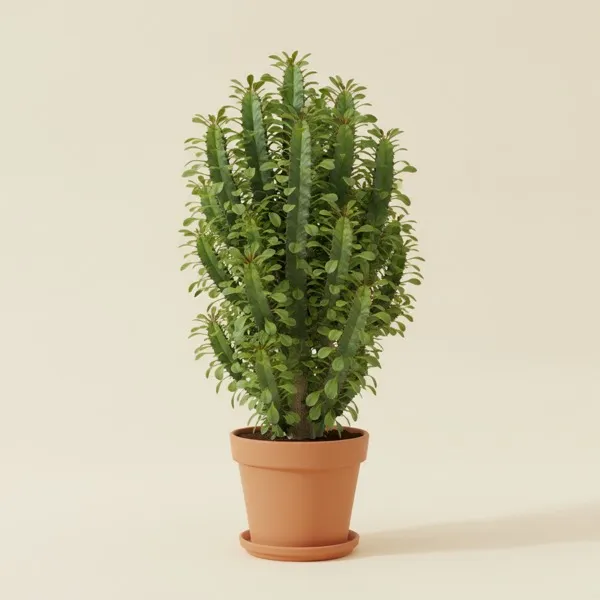
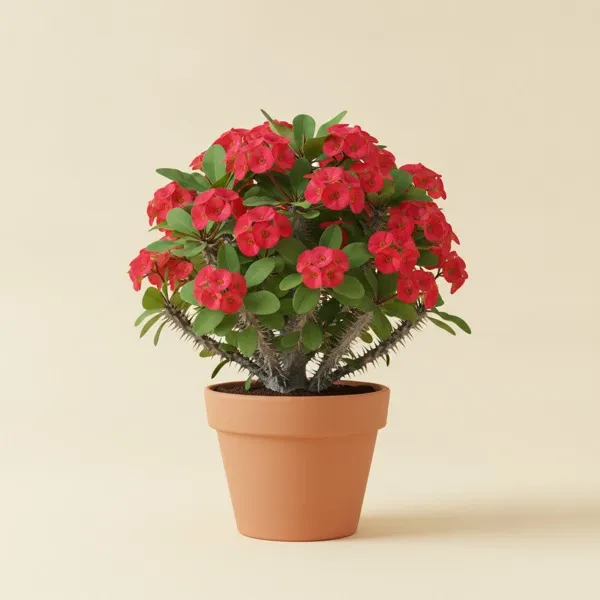
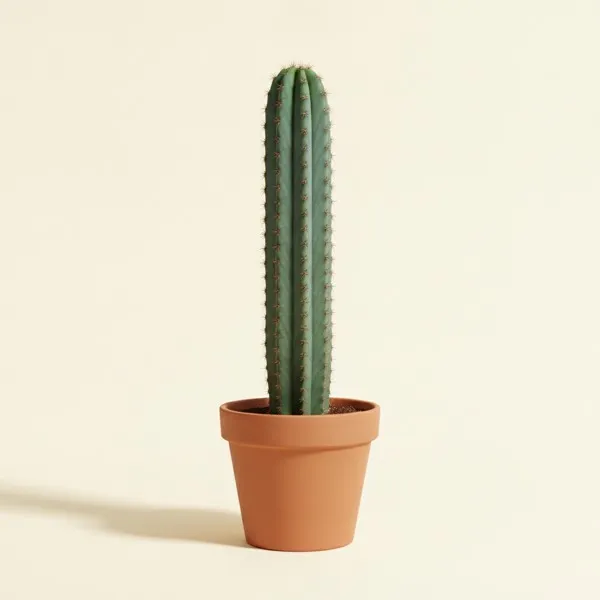
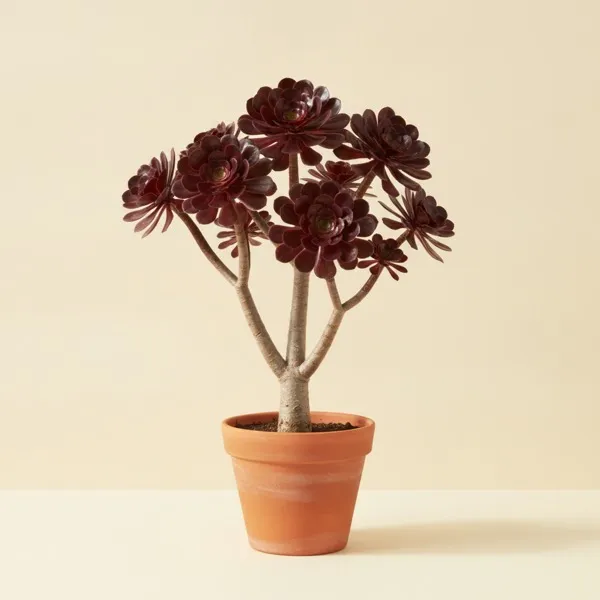
A candelabra euphorbia, not a cactus: three-sided green columns with paired thorns and small leaves along the ridges. Fast for a succulent, and it will outgrow a windowsill into a branching column.
Origin: Central Africa
How much light 100 common houseplants actually need, in lux. Each one shows the light it prefers, the light it will put up with, and the light that kills it.
Most rooms away from a window, and most rooms under lamps.
A few steps from good glass, or a bright room on an overcast day.
Right at unobstructed glass without sun falling on the leaves.
Sun landing on the spot itself.
Tolerates is not the same as prefers. A plant listed as tolerating low light will survive there and grow slowly, stretch toward the window and drop the odd leaf. The ideal column is where it actually does well. Published lux figures for the same species vary a lot between sources, usually because some quote foot-candles at leaf level and others quote lux at the spot, so each card here links to the references its claim was checked against.
Showing all 100 species.
A candelabra euphorbia, not a cactus: three-sided green columns with paired thorns and small leaves along the ridges. Fast for a succulent, and it will outgrow a windowsill into a branching column.
Origin: Central Africa
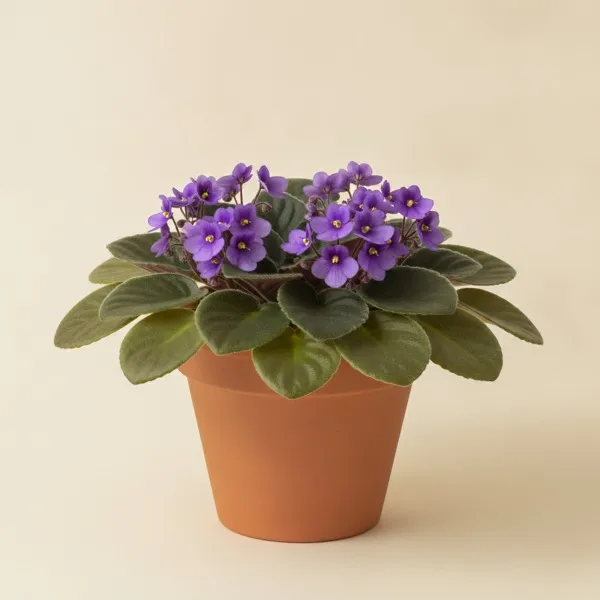
A compact rosette that flowers almost continuously in bright indirect light. The fuzzy leaves mark permanently where cold water touches them, so it is watered from below.
Origin: the Eastern Arc mountains of Tanzania and Kenya
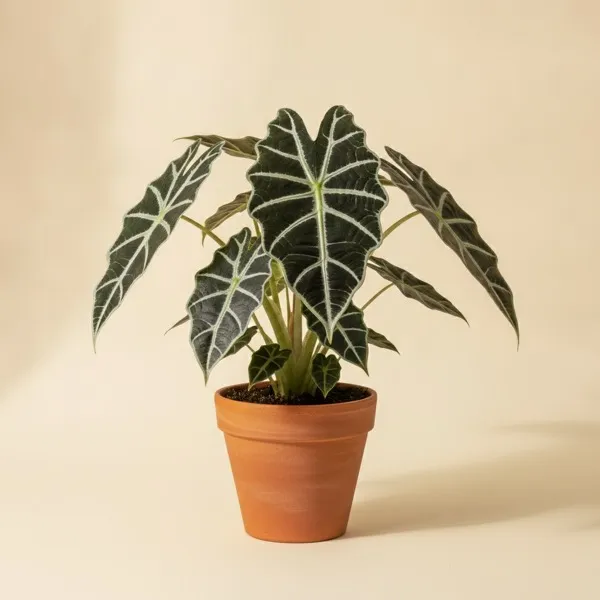
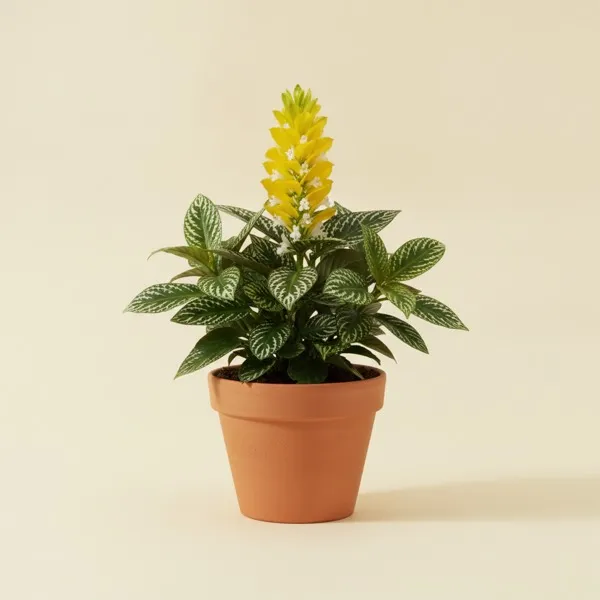
Arrow-shaped leaves in near-black green with white veins, held on upright stems. It grows from a tuber and will drop everything and go dormant if it is cold, dry or too dark, then return from the tuber.
Origin: Southeast Asian rainforests, by way of its parent species, the plant itself is a garden hybrid
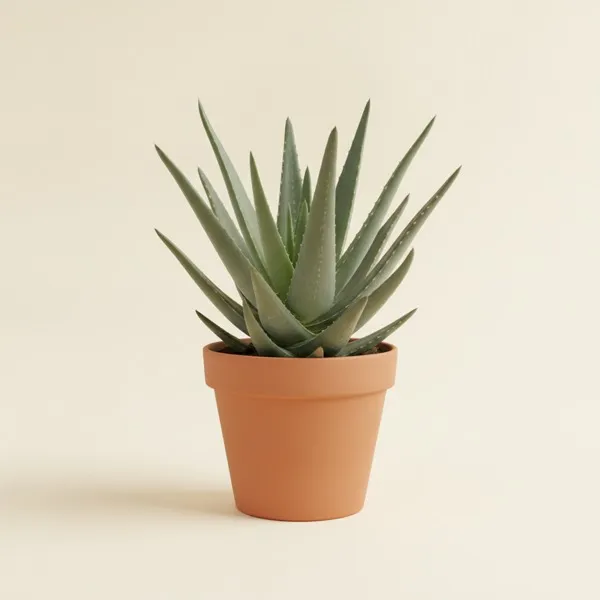
Thick grey-green leaves storing water and the familiar gel. It offsets readily, so one plant becomes a pot of pups within a couple of years.
Origin: the Arabian Peninsula; now grown all over the world
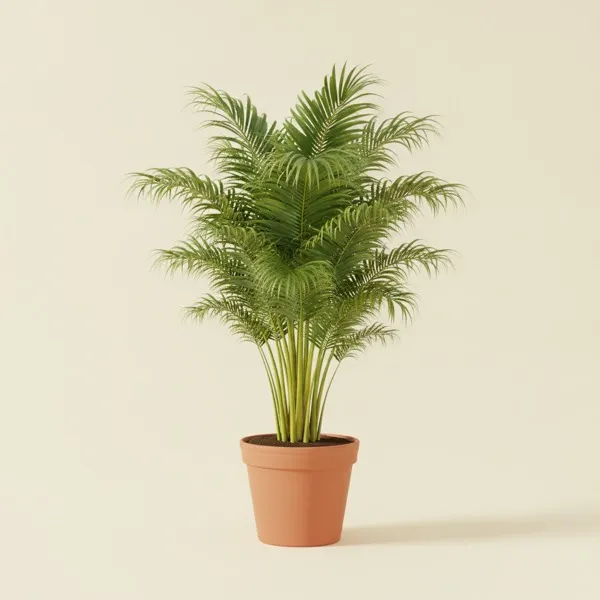
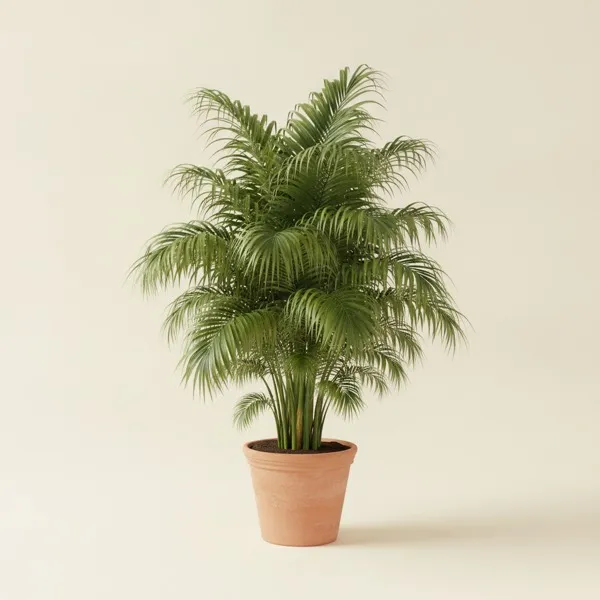
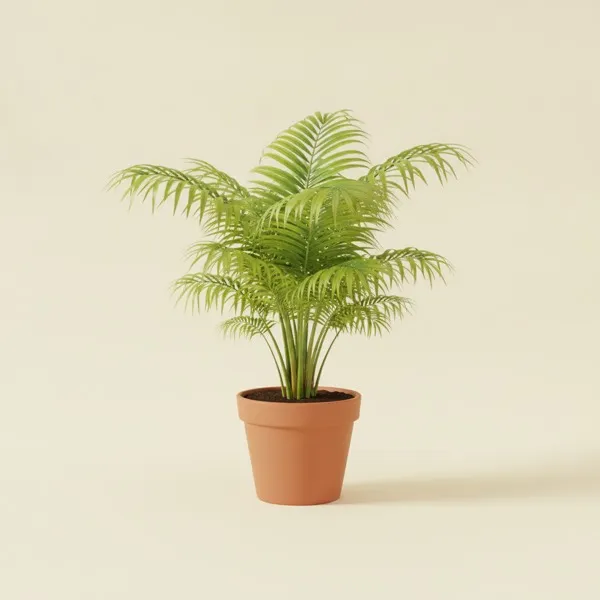
A clumping feather palm with several slim golden stems from one root mass. The most forgiving big palm indoors, provided it never dries out fully.
Origin: Madagascar, where it is endangered in the wild
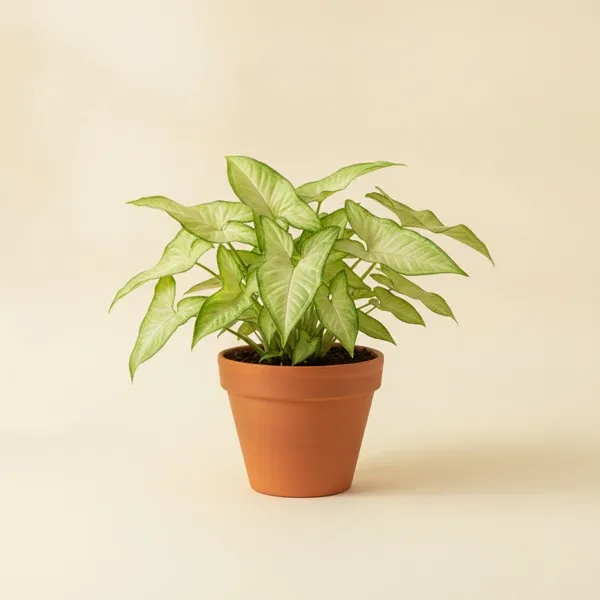
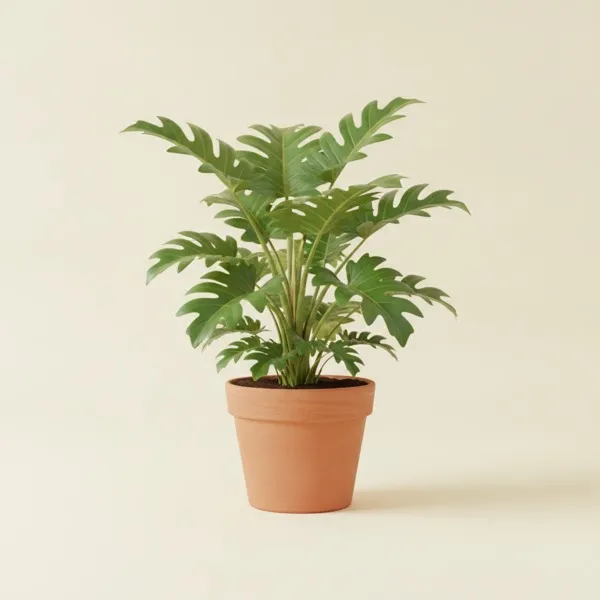
Starts as a bushy rosette of arrow-shaped leaves and turns into a climber with lobed adult foliage once it finds something to grip. Pinch it back to keep the compact form.
Origin: southern Mexico down to Brazil
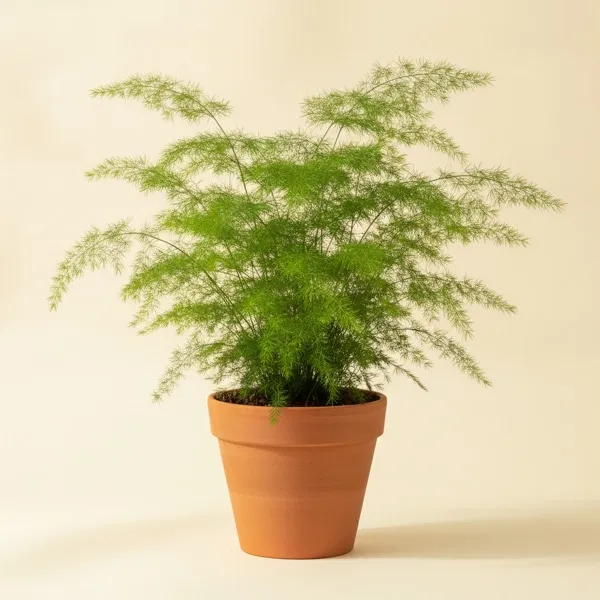
Not a fern but a climbing asparagus relative, its flat sprays of fine needles are modified stems. Wiry and tougher than it looks, with thorns on older growth.
Origin: Southern Africa
A small peperomia with thick, cupped, semi-succulent leaves that store their own water. It tolerates neglect better than attention.
Origin: Florida, Mexico and northern South America
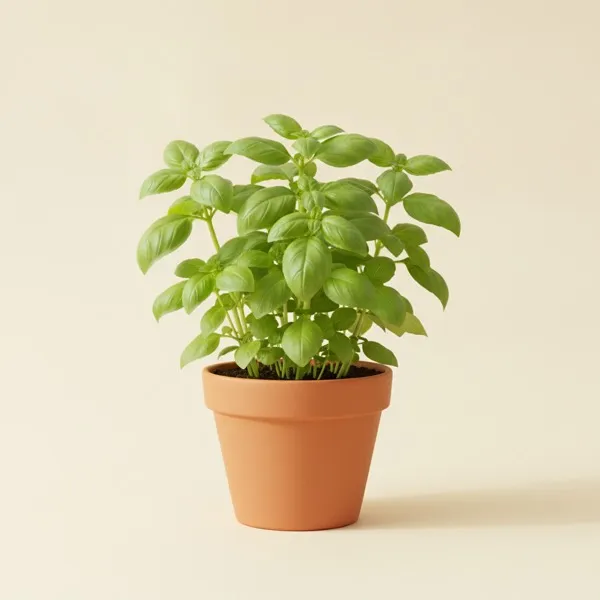
An annual herb that wants more light than any windowsill usually offers and goes to seed the moment it flowers. Pinch the tips constantly and treat it as a crop, not a houseplant.
Origin: Tropical Asia and Africa
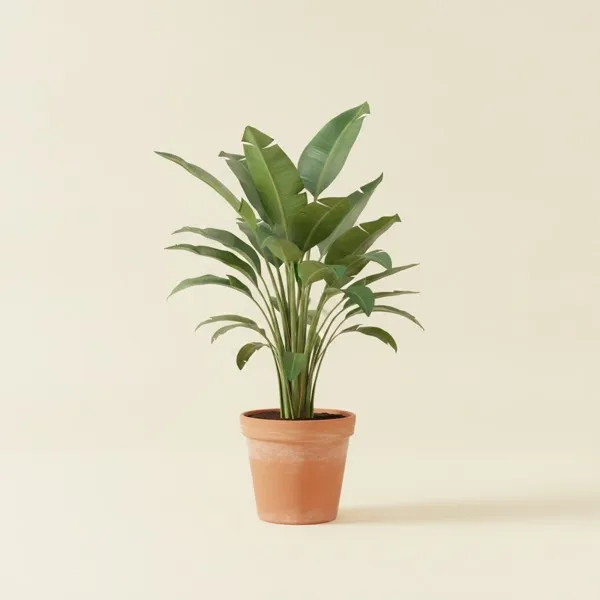
Big paddle leaves on long stalks, and, with several years and real sun, the orange crane flower it is named for. It needs a lot of light to bloom indoors, and most never do.
Origin: the Eastern Cape of South Africa
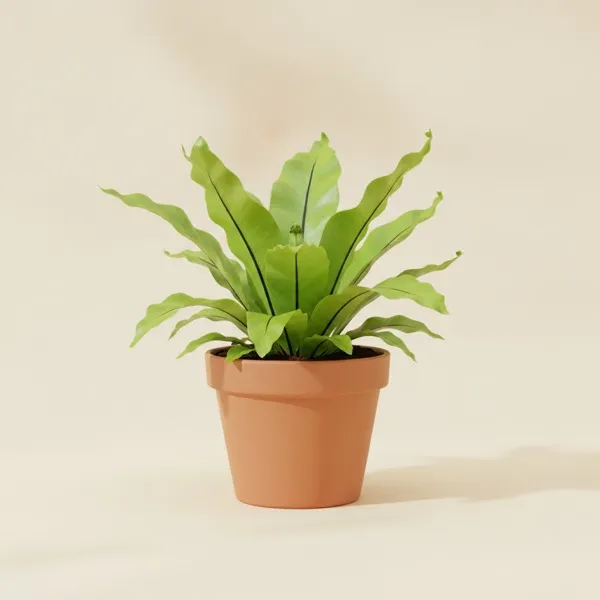
An epiphytic fern whose undivided fronds unfurl from a fuzzy central crown in a shuttlecock shape. Water the mix around the crown, never into it.
Origin: Tropical Asia, East Africa and eastern Australia
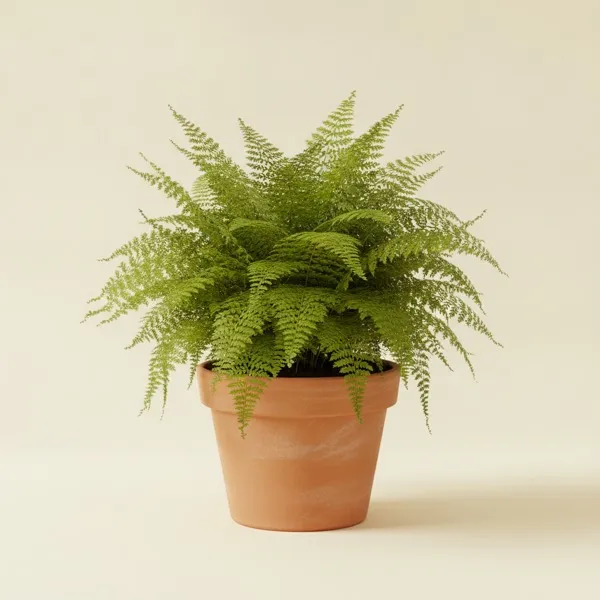
Arching fronds of fine leaflets, and the classic hanging fern of a Victorian porch. It is thirsty and hates dry air, the two reasons it sheds all over the floor in a heated room.
Origin: Tropical America
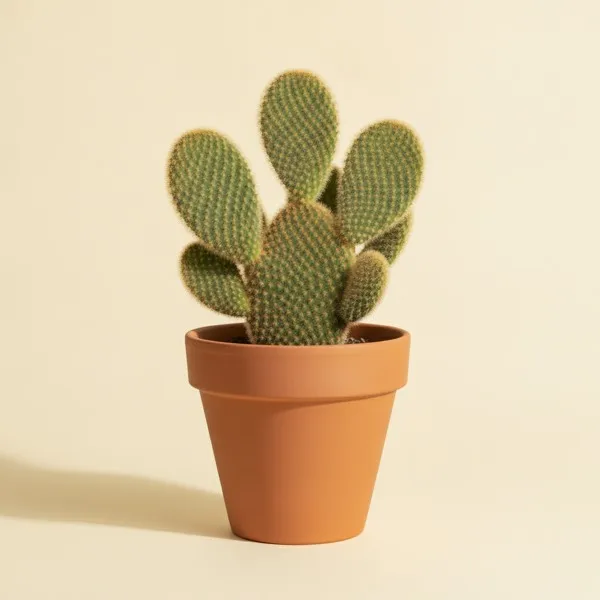
Flat pads in pairs like ears, covered in glochids, fine barbed bristles instead of spines. Those detach at a touch and are miserable to remove from skin, so handle it with a folded newspaper.
Origin: Northern and central Mexico
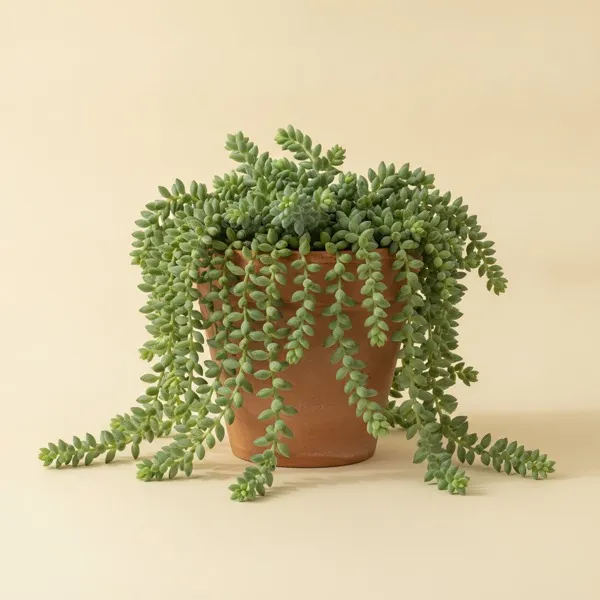
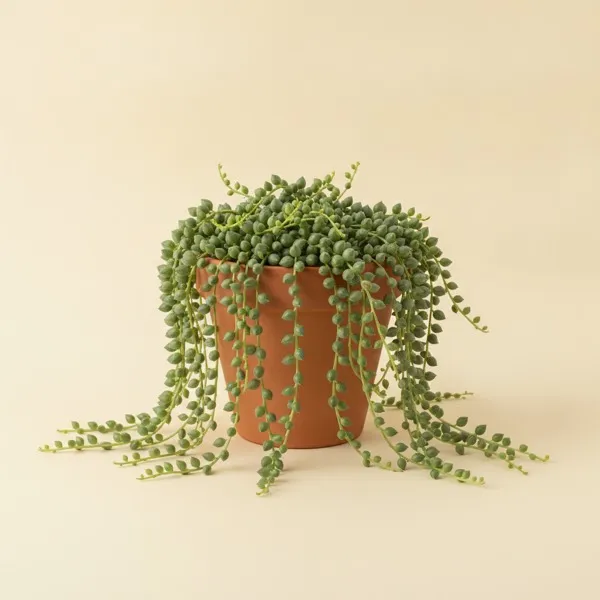
Trailing stems packed with plump blue-green beads, best in a hanging pot where nothing brushes it. The beads drop at the slightest knock, each one that lands in soil becomes a new plant.
Origin: Veracruz, in southern Mexico
Wide round leaves banded silver and green, among the largest in the group. It reads tap water, dry air and cold as insults and browns at the edges to tell you which.
Origin: Bolivia
Named for what it survives: deep shade, draughts, irregular water, a hallway. Upright lance- shaped leaves come straight out of the soil and it grows slowly enough to stay put for a decade.
Origin: Southern Japan and Taiwan
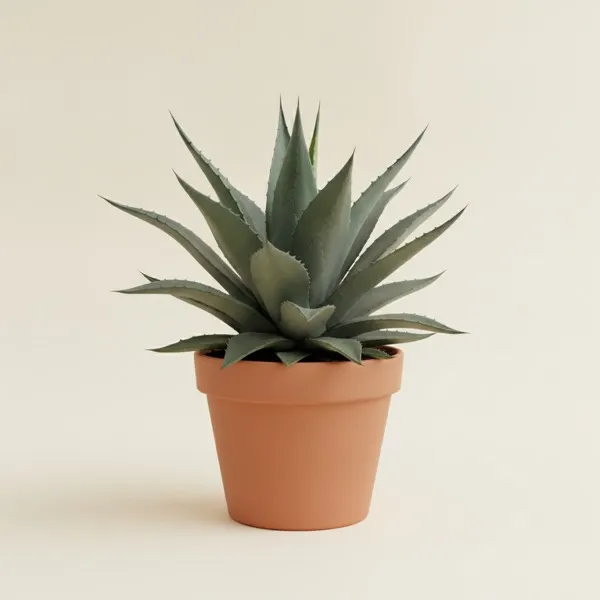
A large grey rosette with spine-tipped leaves and a serious terminal thorn. It flowers once after decades and then dies, leaving offsets, hence the name.
Origin: North-eastern Mexico and Texas
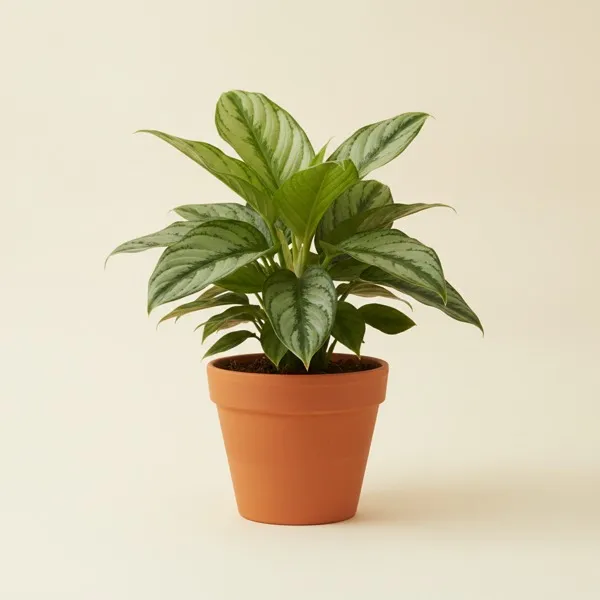
The best-looking plant that genuinely tolerates a dim room, in silver, cream and green patterns. Slow, tidy, and content with a north window.
Origin: the Philippines and north-eastern Sulawesi
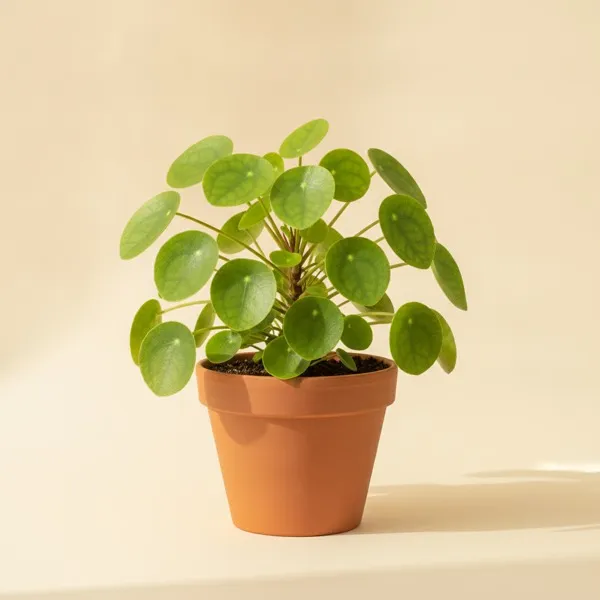
Round coin-like leaves on long stalks, held out from a single stem. It was passed hand to hand between growers for decades before nurseries caught up, and it still propagates by giving pups away.
Origin: South-western China, in Yunnan and Sichuan
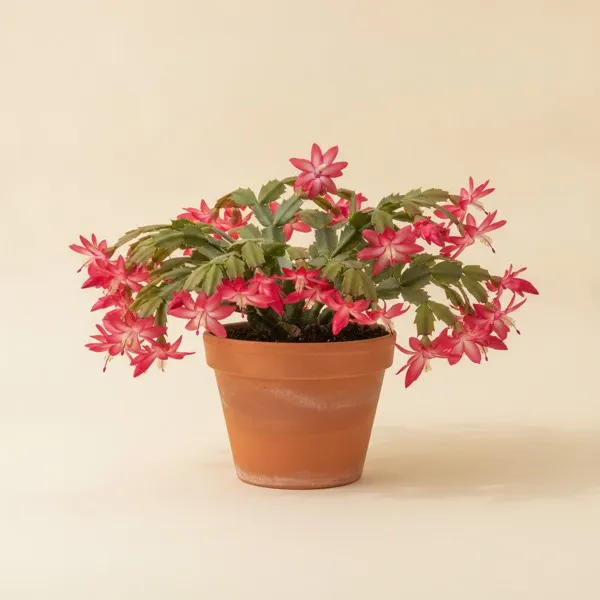
A forest epiphyte, not a desert cactus: flat segmented stems and no spines. It sets buds on shortening days, so autumn darkness and cool nights are what make it flower.
Origin: the coastal mountains of south-eastern Brazil
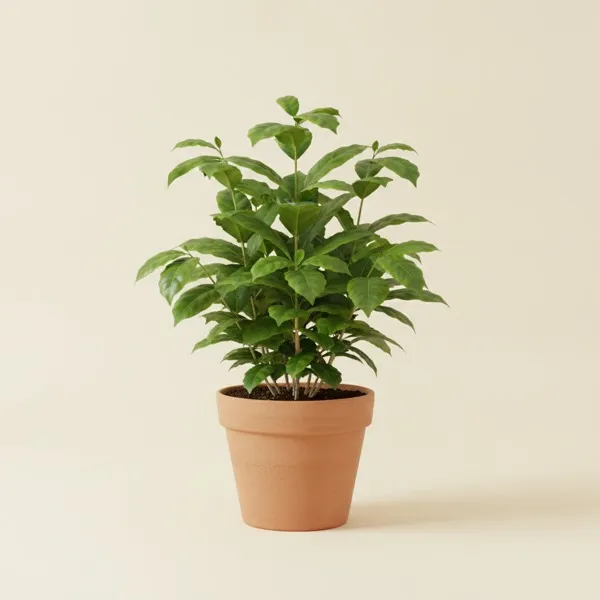
Glossy waved leaves in tiers, and the plant every cup comes from. It will fruit indoors after three or four years in good light, though a windowsill crop is a novelty rather than a harvest.
Origin: the highland forests of south-western Ethiopia
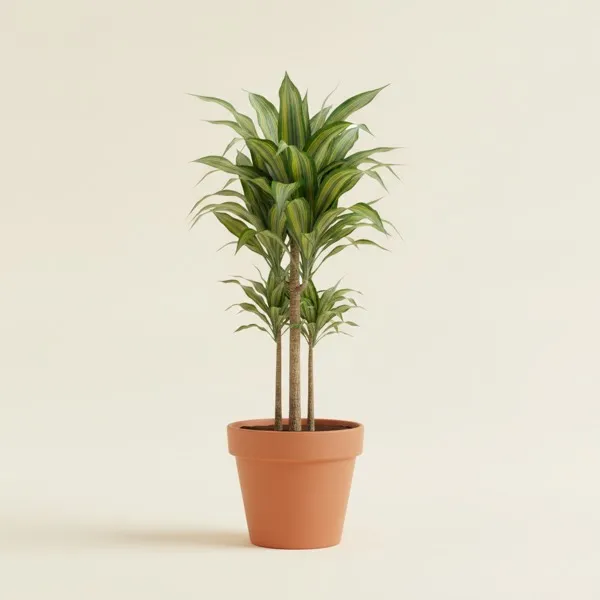
A thick woody cane topped with arching strap leaves, usually striped yellow or lime. Sold as bare canes that resprout, which is why it looks like furniture and behaves like a shrub.
Origin: Tropical Africa
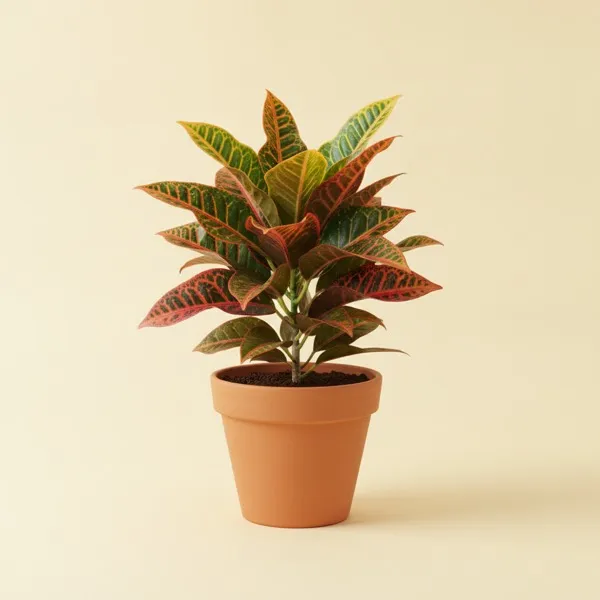
Leathery leaves splashed red, orange, yellow and green, the colour is the whole point and it needs strong light to hold it. It resents being moved and sheds leaves to say so.
Origin: Indonesia and Malaysia east into the Pacific islands
A spiny succulent shrub that flowers nearly year-round in good light, the real flowers tiny between two coloured bracts. The milky sap is an irritant, so prune with gloves.
Origin: Madagascar
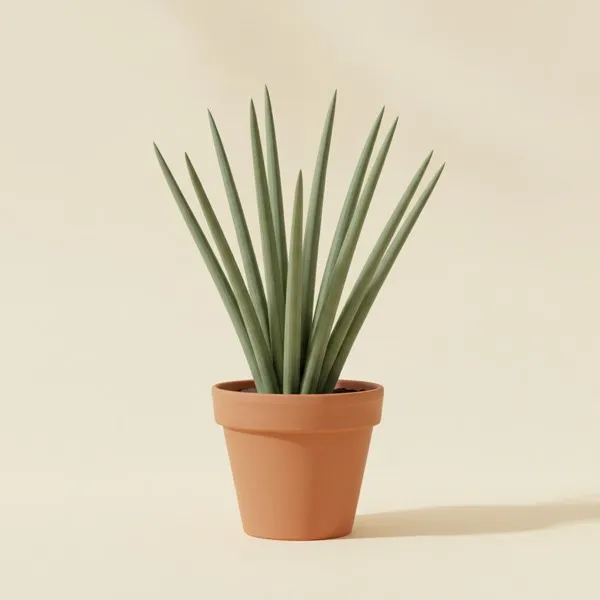
The same genus as the snake plant, with round spear-like leaves instead of flat ones. Often sold braided; the braid is a florist's trick and the leaves grow on regardless.
Origin: Angola
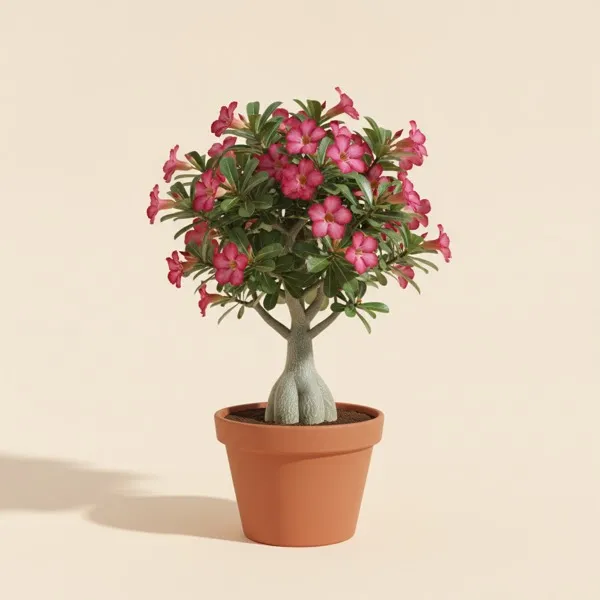
A swollen-based caudex succulent with trumpet flowers in pink and white. It wants a dry winter rest, and the fat base is a water store rather than a trunk, rot there is fatal.
Origin: the Sahel and East Africa into Arabia
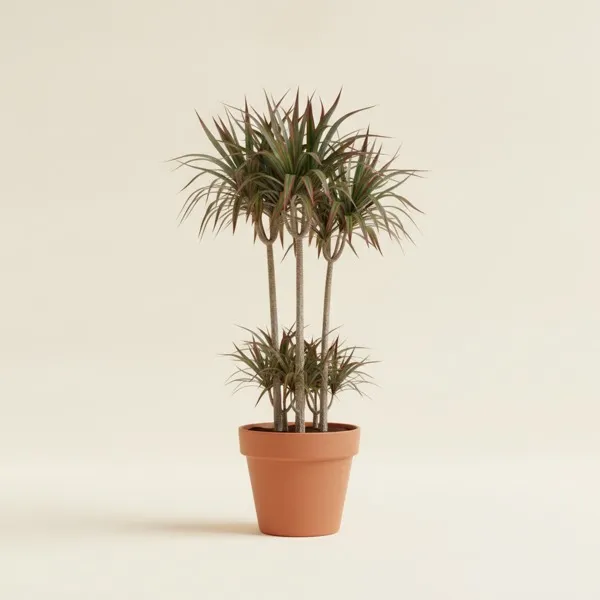
Slim grey canes branching where they have been cut, each topped with a fountain of narrow red- edged leaves. Architectural, tough, and very slow to outgrow a corner.
Origin: Madagascar
Broad cream-marbled leaves on a thickening cane, and one of the few big-leaf tropicals happy in a mid-room spot. The sap burns the mouth, the source of both its names.
Origin: the Caribbean and northern South America
A giant herb, not a tree: each 'trunk' is a stack of leaf bases that fruits once and is replaced by a sucker. Enormously thirsty and hungry, and it shreds its own leaves in a draught.
Origin: Southeast Asia
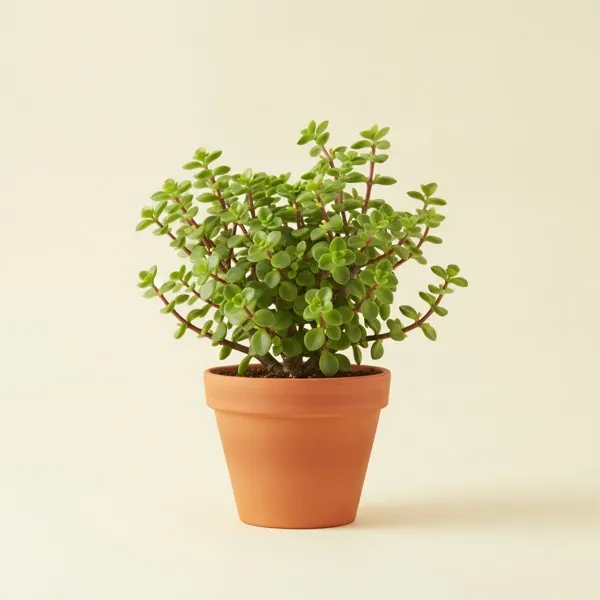
A soft-wooded succulent shrub with small round leaves, browsed by elephants in the wild. It takes hard pruning happily, which makes it a common beginner's bonsai subject.
Origin: South Africa
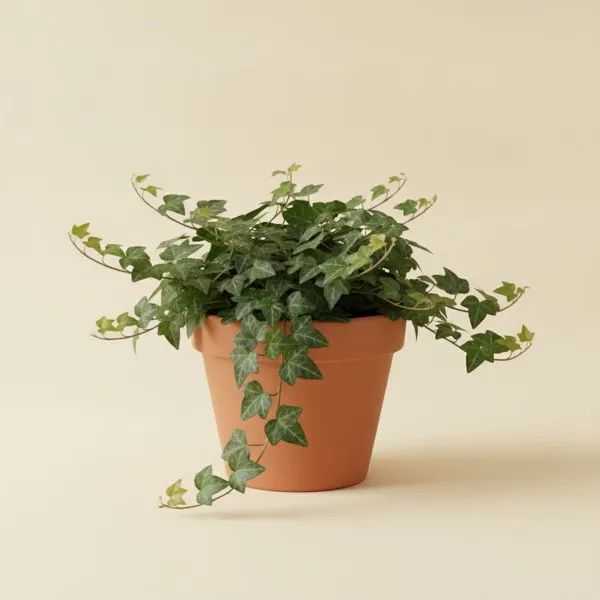
A self-clinging climber that will trail from a shelf or cover a frame, in dozens of leaf shapes and variegations. Vigorous to the point of weedy, keep it indoors and cut it back hard.
Origin: Europe and western Asia
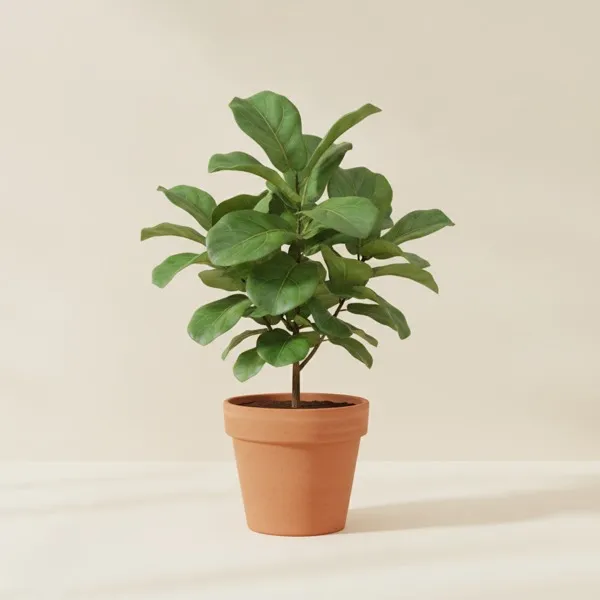
Huge waxy violin-shaped leaves on an upright trunk, and the most photographed and most killed houseplant of the last decade. It wants bright steady light, one spot, and no schedule changes.
Origin: Western Africa, from Sierra Leone to Cameroon
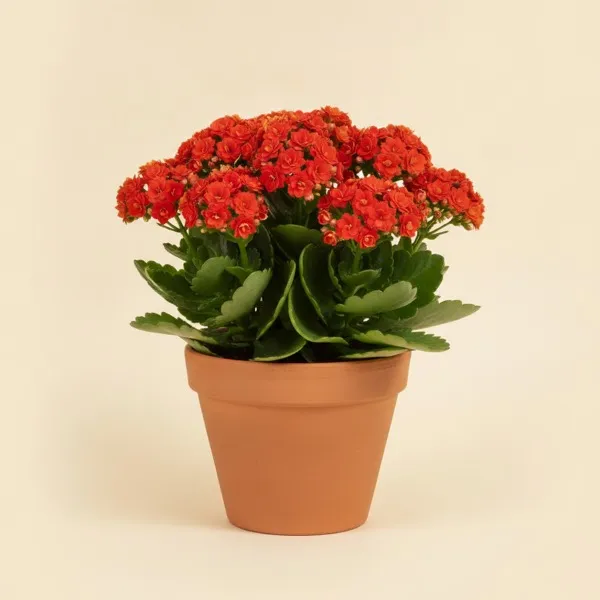
A succulent kalanchoe grown for dense heads of small flowers over scalloped leaves. Sold in bud year-round; it reblooms only after a spell of long nights, which is why most are treated as temporary.
Origin: Madagascar
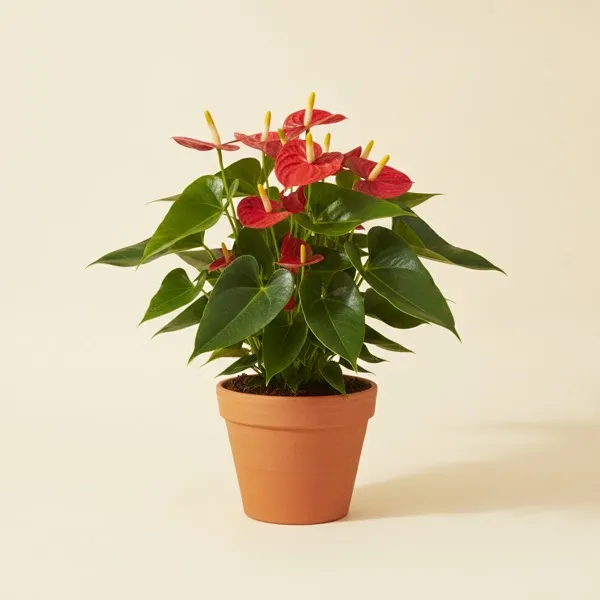
The red 'flower' is a waxy bract; the real flowers are the spike standing out of it. In good light it produces them almost continuously, each lasting weeks.
Origin: Western Colombia and Ecuador
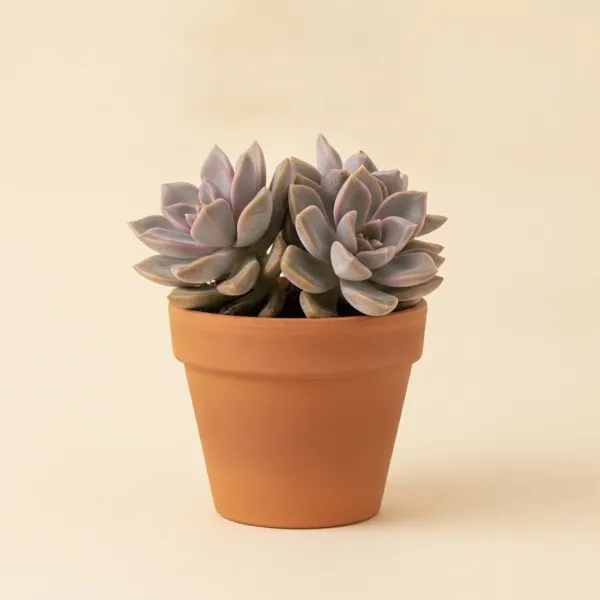
A flat rosette of pointed leaves in pearl grey, pinker in strong sun and bluer in shade. Stems lengthen and lean with age, which is normal rather than a fault.
Origin: Tamaulipas in Mexico, despite the name, not Paraguay
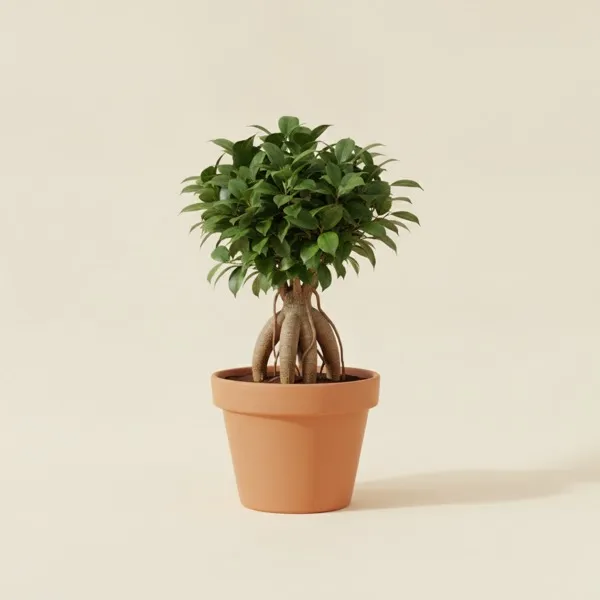
A fig sold as instant bonsai: a fat swollen root stock grafted with small-leaved top growth. It is a tree in a shallow pot, so it dries out fast and needs regular pinching.
Origin: Southern China through to northern Australia
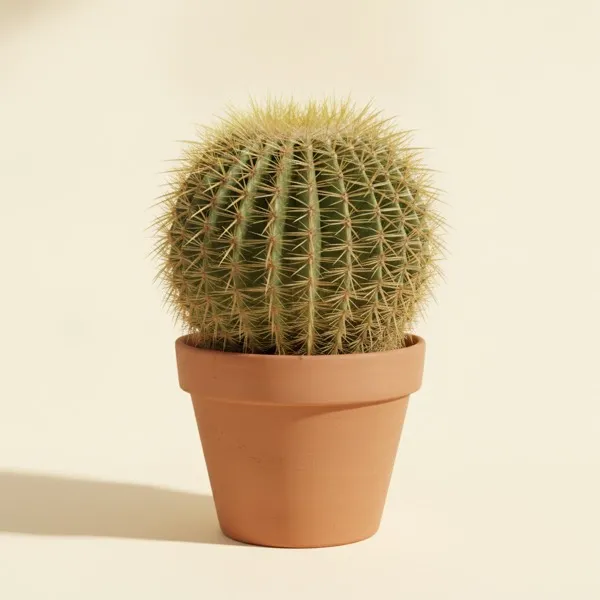
A ribbed globe armoured in golden spines, growing a centimetre or two a year into a barrel. Common in cultivation and nearly gone from its home valleys, which were dammed.
Origin: Querétaro and Hidalgo in central Mexico, where it is endangered in the wild
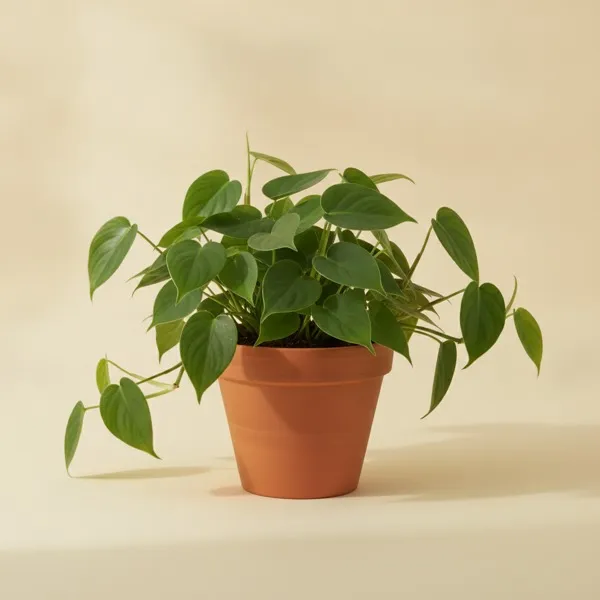
Matte heart-shaped leaves on fast trailing vines, the plant to hand a beginner. It roots from any cutting and forgives a missed week.
Origin: Central America, the Caribbean and Brazil
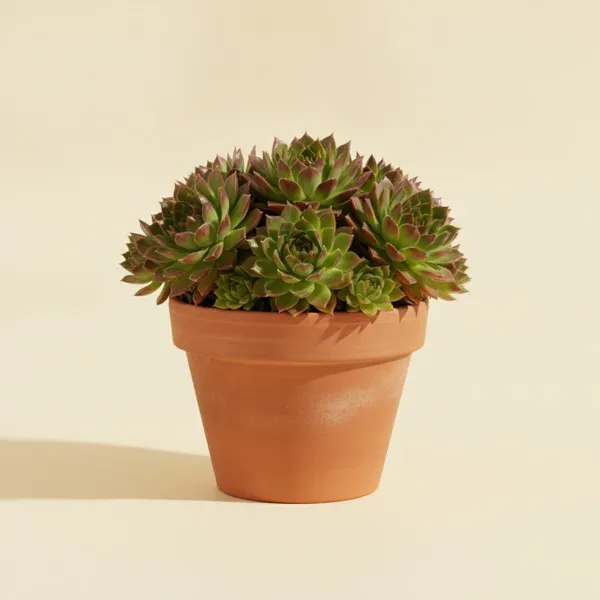
A hardy alpine rosette that ringed itself with offsets, the chicks. It is far happier on a cold balcony than in a warm room, and it survives frost that would kill any other succulent here.
Origin: the mountains of southern and central Europe
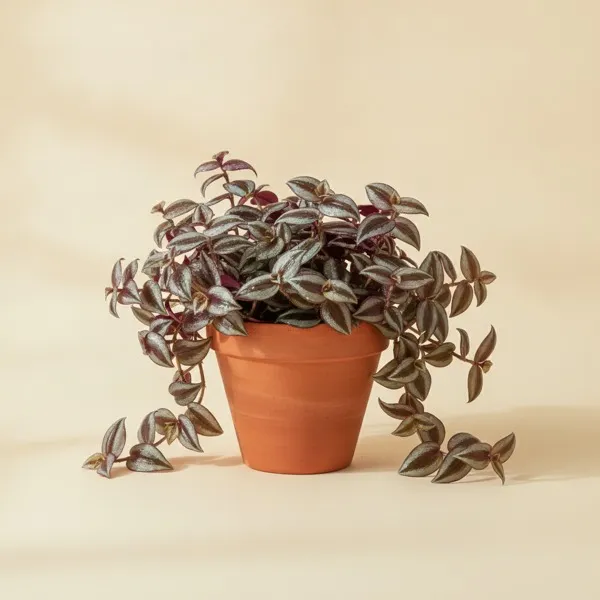
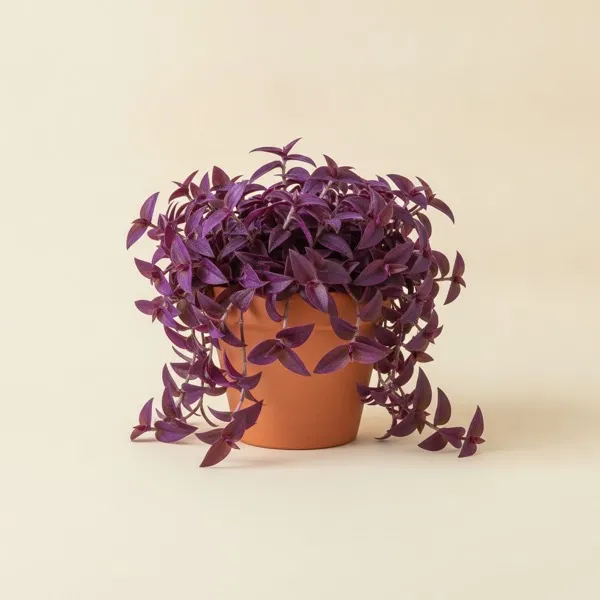
Fast trailing stems striped purple and silver, growing the inch a week the name claims. It goes leggy quickly, pinch it back constantly and root the pieces in the same pot.
Origin: Southern Mexico and Guatemala
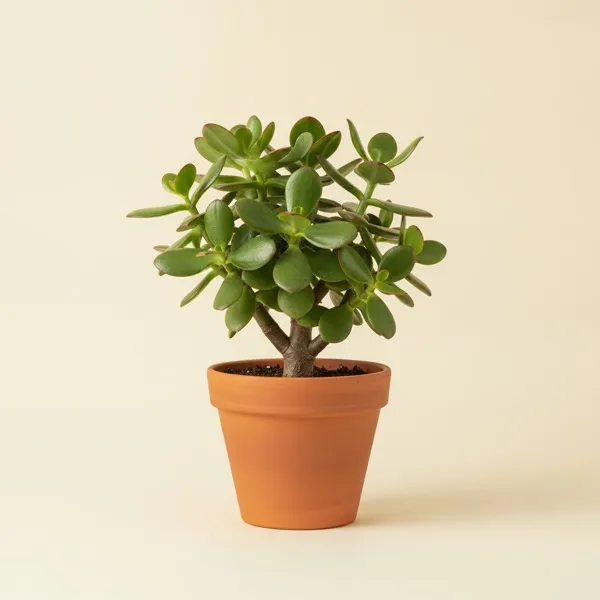
A thick-trunked succulent shrub with glossy paddle leaves, edged red in good light. It lives for decades, thickens like a tree, and is the classic windowsill heirloom.
Origin: South Africa and Mozambique
Short stems crowded with glossy bean-shaped leaves that turn bright red at the tips in sun. The leaves detach easily and root where they land.
Origin: Mexico, and probably a garden hybrid
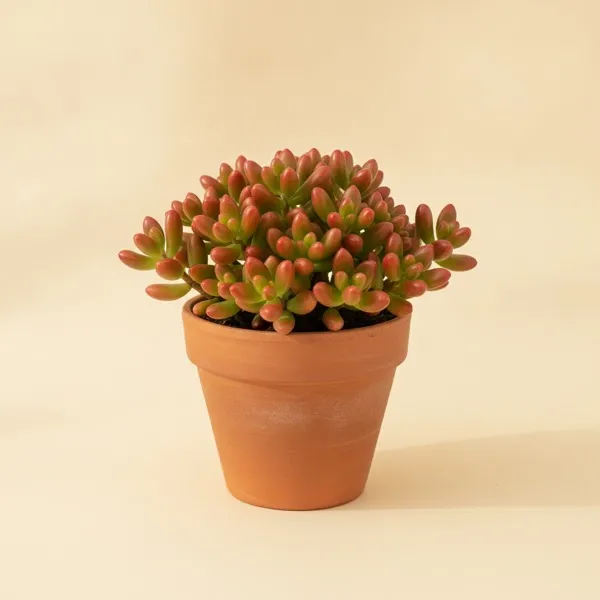
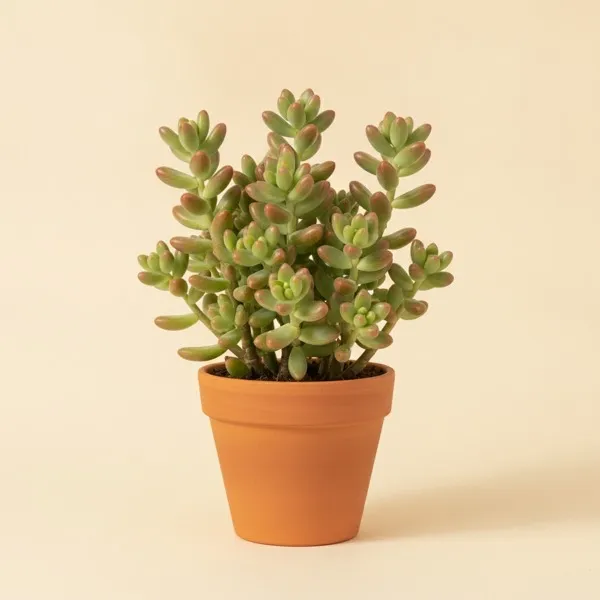
Sedum with fat blue-green fingers tipped red where the sun hits hardest. That red is not stress damage, it is the plant colouring up, and it fades in shade.
Origin: Oaxaca, in southern Mexico
The palm Victorian hotels used, and still the best one for a dim corner: dark arching fronds on slim stems, slow and unfussy. Expensive because it is grown from seed and takes years.
Origin: Lord Howe Island, off eastern Australia
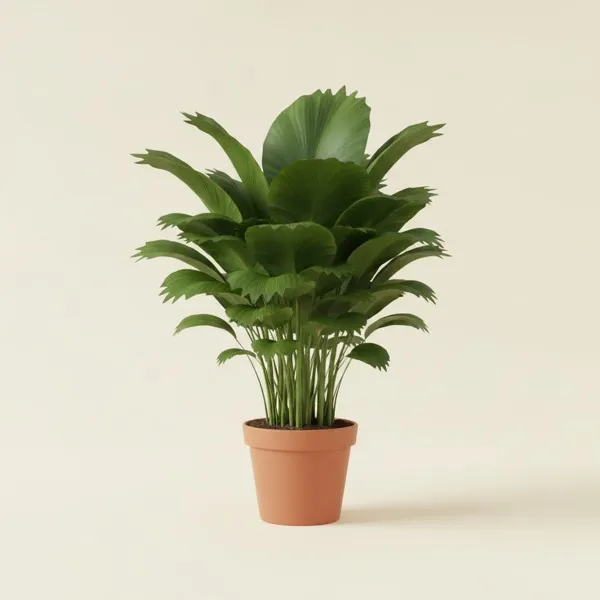
A clumping fan palm with split, blunt-tipped leaflets on cane-like stems. The most shade- tolerant palm sold, and it takes dry indoor air better than most.
Origin: Southern China and Vietnam
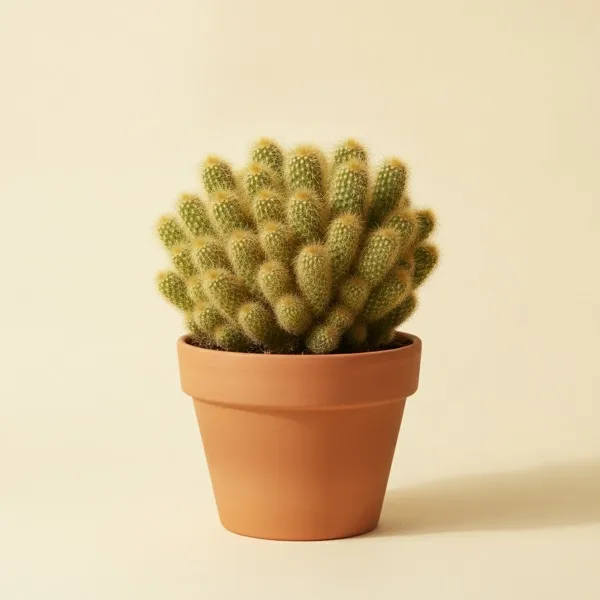
Clustering fingers covered in neat golden spines, offsetting into a colony that fills its pot. Among the easiest cacti to keep and to give away.
Origin: Central Mexico
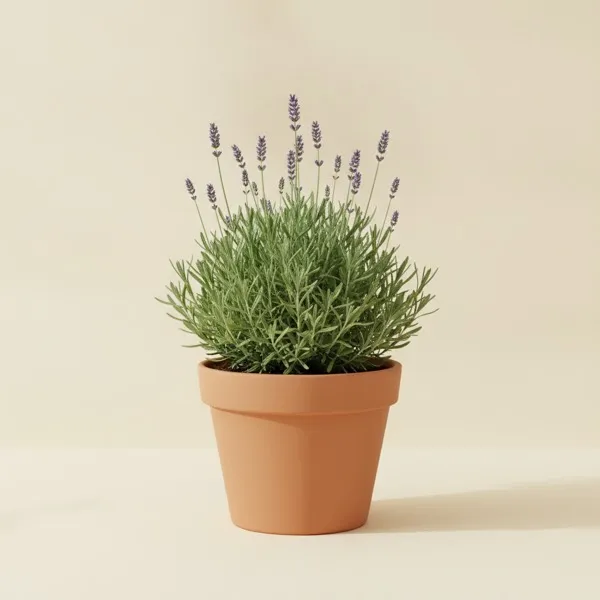
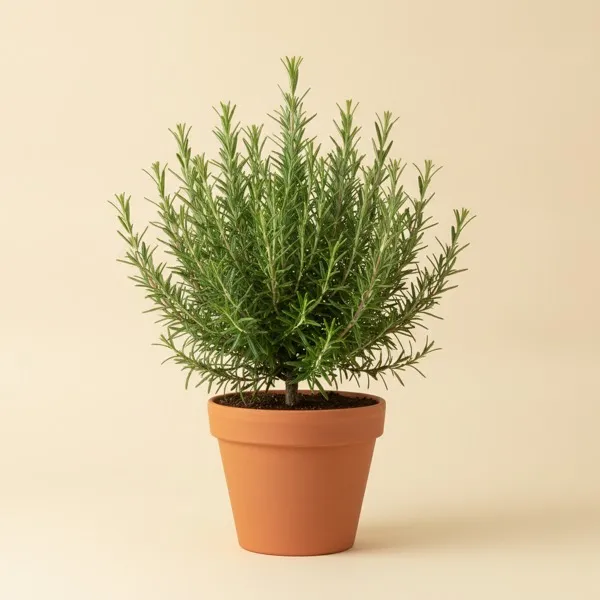
A woody Mediterranean sub-shrub that wants sun, wind and poor dry soil, none of which a living room has. Grow it on a balcony and bring it in only for hard frosts.
Origin: the western Mediterranean
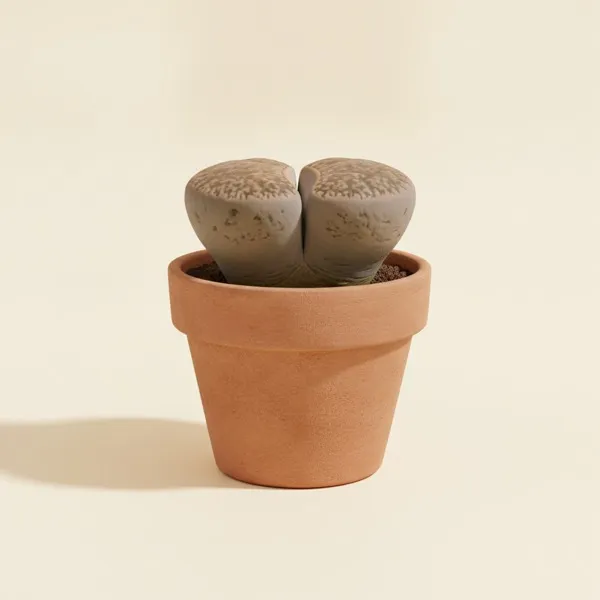
Two fused leaves flush with the ground, patterned to look like the pebbles around them. It drinks only in its growing season and a single kind watering at the wrong time will split it open.
Origin: Namibia
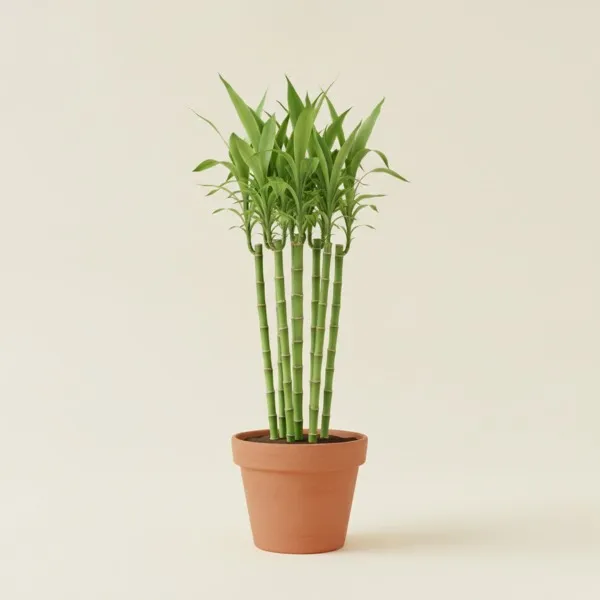
Not bamboo but a dracaena, sold as trimmed canes that root in plain water. The spirals are trained under directional light over months, not grown that way.
Origin: Central Africa, in Cameroon
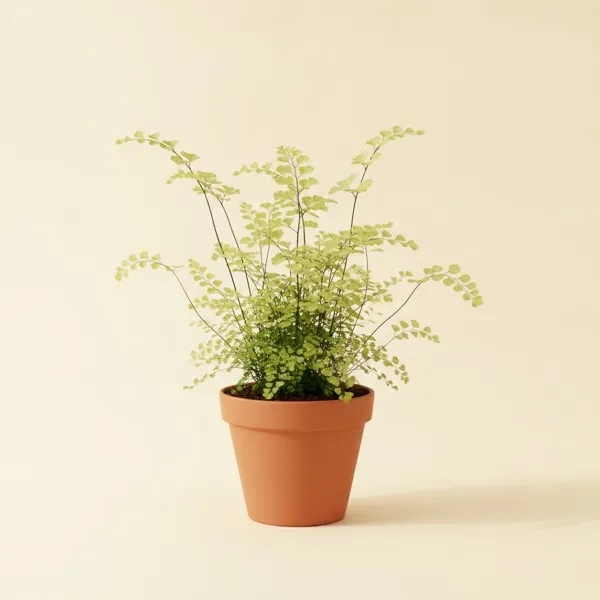
Black wiry stems and fans of thin bright green leaflets, the most beautiful small fern and the least forgiving. One dry afternoon crisps the lot, though cutting it to the base often brings it back.
Origin: Tropical South America
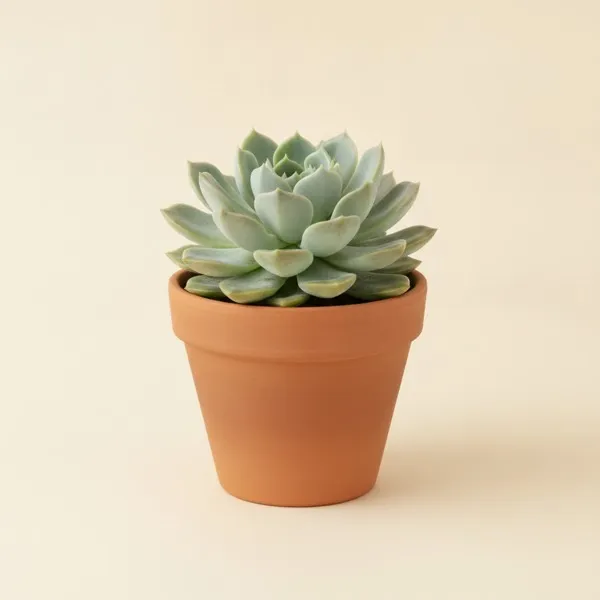
A tight pale-blue rosette with a chalky bloom that fingerprints permanently. It offsets into clusters and stays small enough for a saucer.
Origin: Hidalgo and San Luis Potosí in Mexico
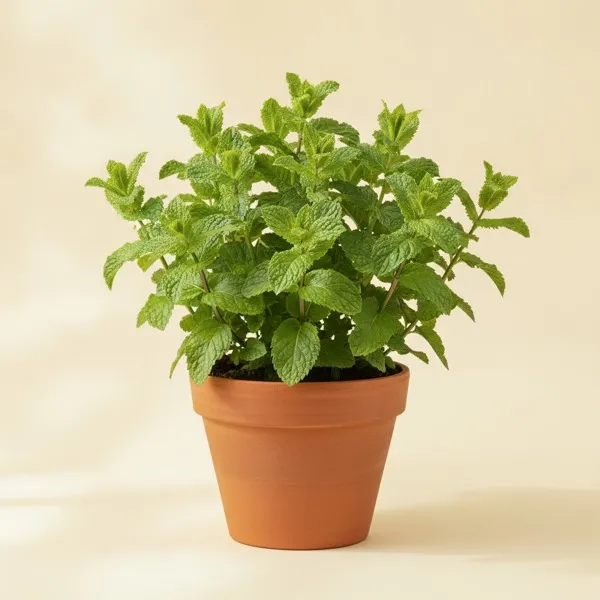
A runner-spreading perennial that will fill any pot it is given and then some. Cut it hard and often; it is one of the few herbs that genuinely thrives on an indoor sill.
Origin: Europe and southern Asia
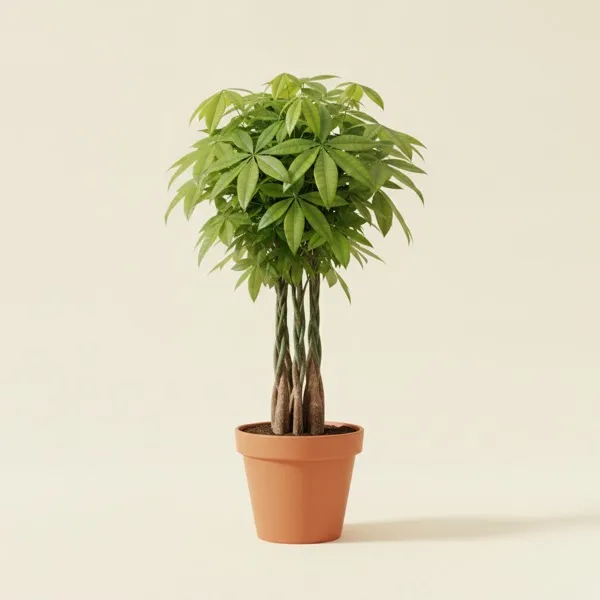
A wetland tree sold with its trunks plaited while young, the braid is done by the grower and cannot be undone. Palmate leaves of five leaflets, and far more tolerant of wet feet than most houseplants.
Origin: the swamps from Mexico to northern South America
A rainforest climber whose leaves only split and window once the plant is mature and well lit, small entire leaves mean it is young or too dark. Give it a moss pole and it will climb for years.
Origin: southern Mexico down to Panama
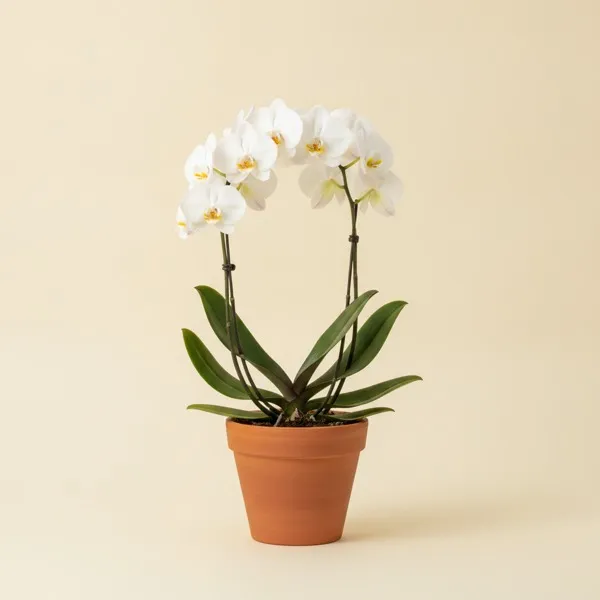
An epiphyte with thick roots that grip bark, not soil, the reason it comes in a bark mix. Flowers last for months, and cutting the spent spike above a node often brings a second spray.
Origin: Southeast Asia through to northern Australia
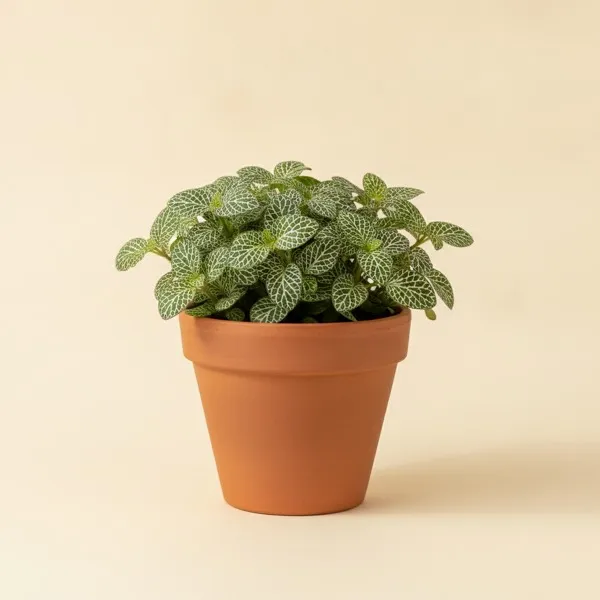
A low creeper with white or pink veins netted across dark leaves. It faints dramatically flat when dry and recovers within hours of watering, which is its whole personality.
Origin: Peru and the western Amazon
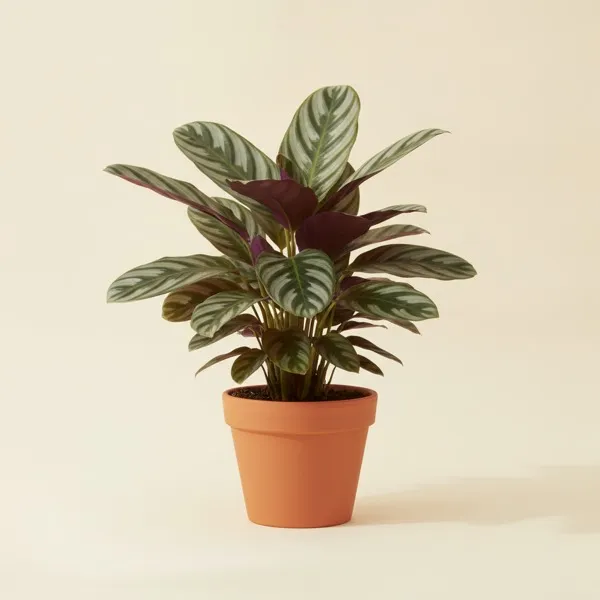
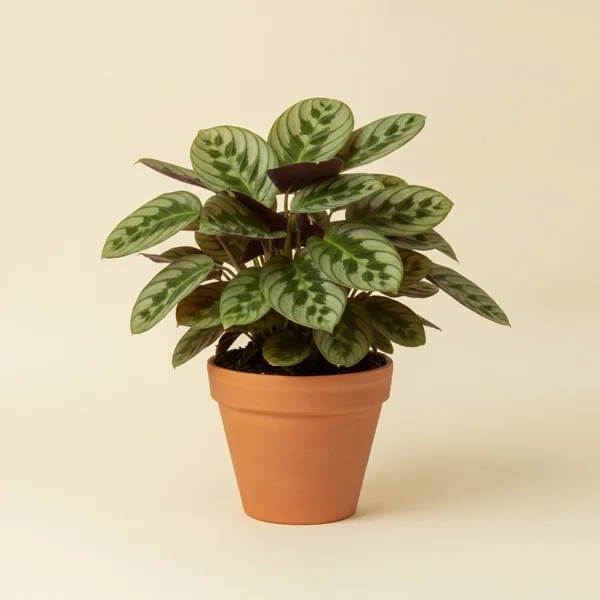
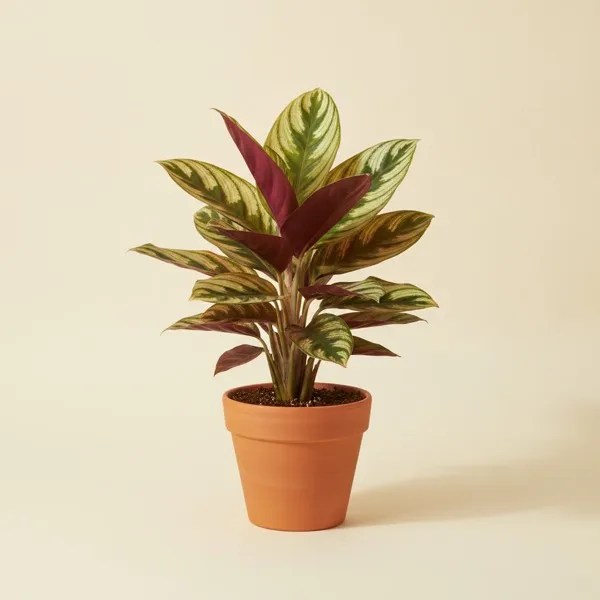
Related to the calatheas and rather less demanding, with long leaves brushed silver above and wine red beneath. It folds them upward at night.
Origin: Brazil
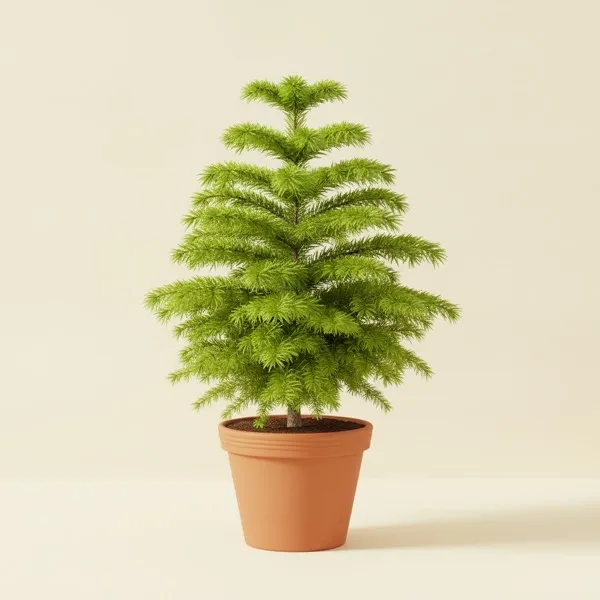
Not a pine but a relict conifer with symmetrical tiers of soft needles. Bought as a living Christmas tree and usually lost to dry air by spring; it wants cool, bright and humid.
Origin: Norfolk Island, in the South Pacific
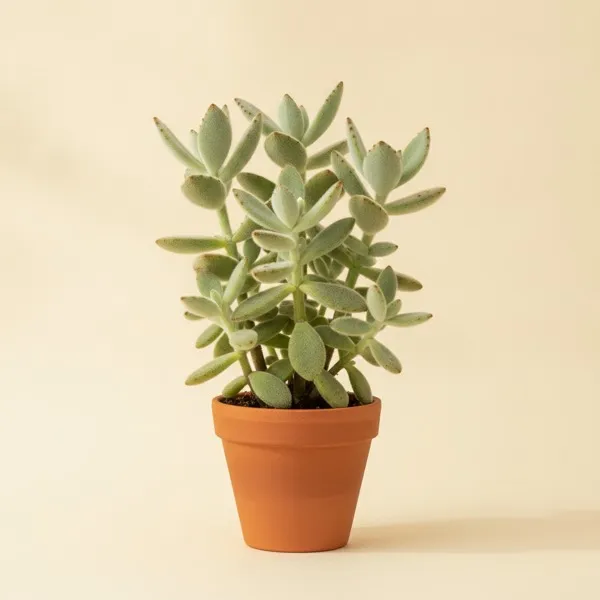
Furry grey-green leaves edged with rust-brown felt, soft as suede. The hairs hold water on the leaf, so water the soil and keep it off the fur.
Origin: Madagascar
A small understorey palm that genuinely accepts low light, sold several to a pot for fullness. Each stem is a separate plant and grows only from its own tip, so a cut stem does not come back.
Origin: Southern Mexico and Guatemala
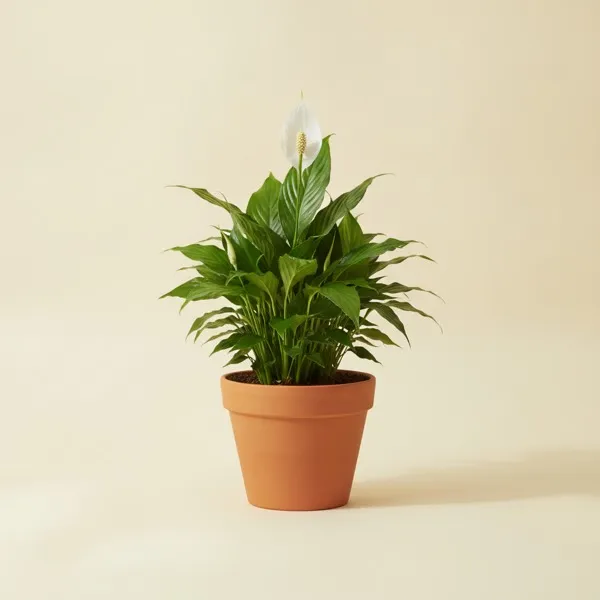
Glossy dark leaves and a white bract around a flower spike, blooming even in modest light. It wilts theatrically when thirsty and stands back up within the hour, do not use that as the schedule.
Origin: the rainforests of Central and northern South America
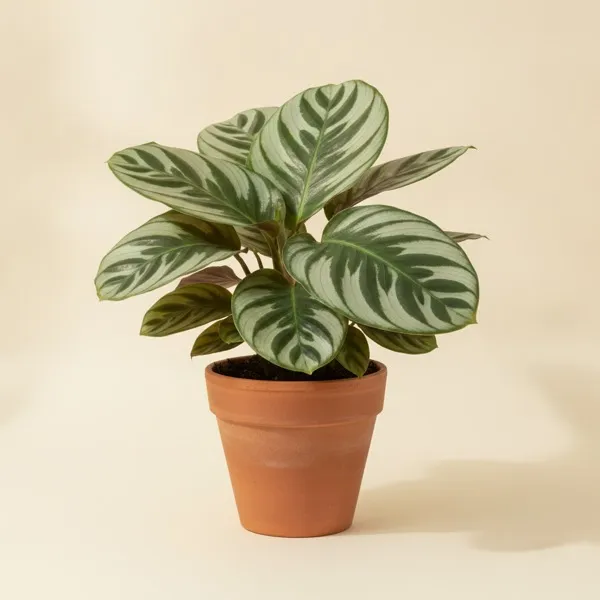
Translucent leaves feathered dark green over pale, with the pattern repeated in purple underneath, the peacock's tail it is named for. As particular about water and humidity as the rest of the family.
Origin: Eastern Brazil
A fast columnar cactus that reaches the ceiling and, given real sun, opens big night-scented white flowers followed by edible fruit. Needs a heavy pot long before it needs anything else.
Origin: Northern South America and the southern Caribbean
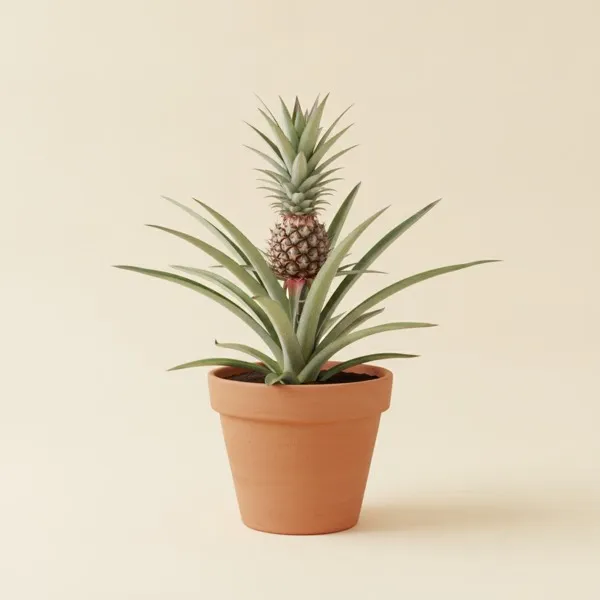
A bromeliad grown for the fruit that sits on top of the plant. The rosette fruits once and then makes pups; the crown off a shop-bought pineapple roots and starts the cycle again.
Origin: Southern Brazil and Paraguay
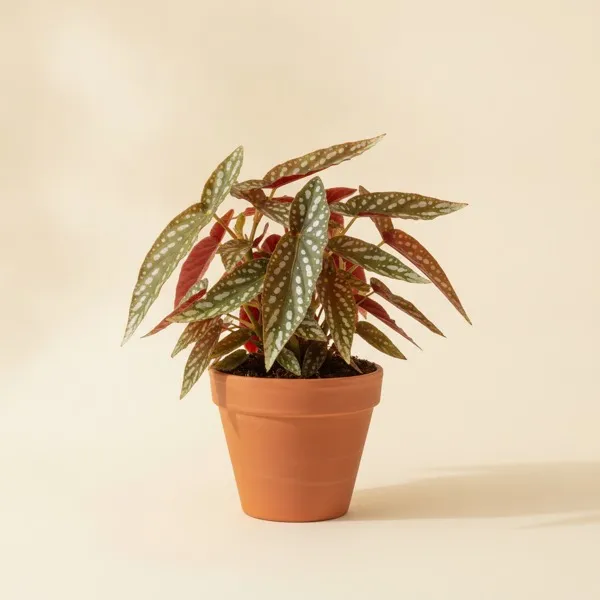
Angel-wing leaves spotted silver above and deep red beneath, on upright jointed canes. Fast and free-flowering, and it snaps if it is knocked, the broken cane roots in water.
Origin: the Atlantic forest of Brazil
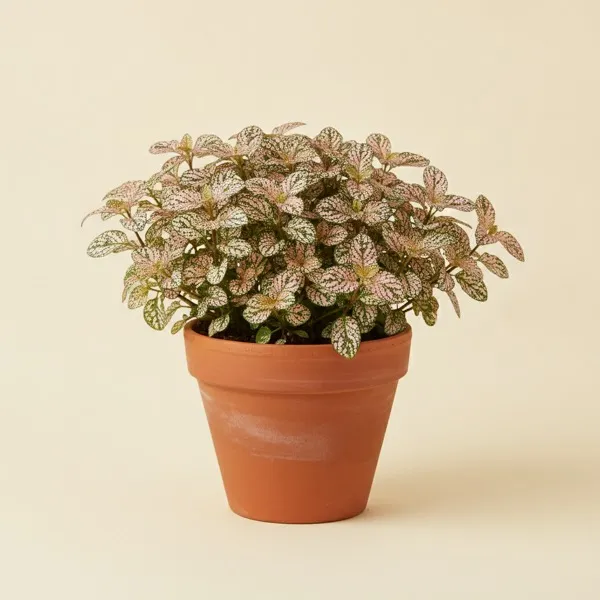
Leaves freckled pink, white or red, brightest in good light and washing out in shade. Short- lived and leggy by nature: pinch the flower spikes off and restart it from cuttings each year.
Origin: Madagascar
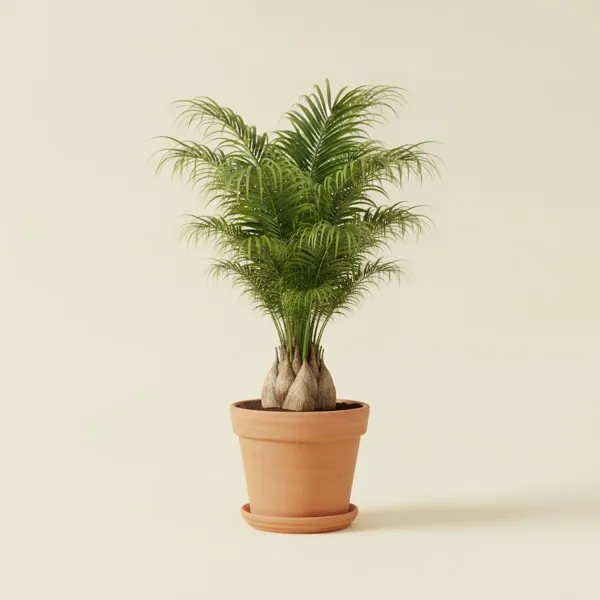
Neither a palm nor a tree but a swollen-based succulent, storing months of water in that bulb under a spray of thin leaves. The one big plant that prefers being forgotten.
Origin: Eastern Mexico, in Veracruz
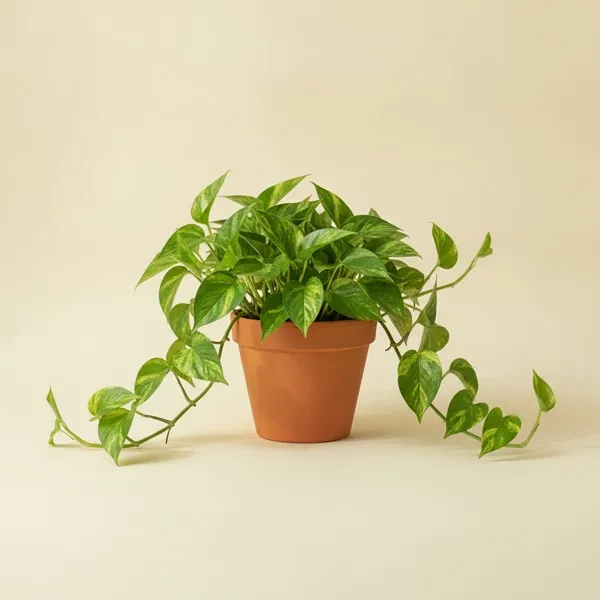
The most forgiving houseplant sold: trailing vines of marbled heart-shaped leaves that grow in almost any light and root from every cutting. Variegation fades in a dim corner.
Origin: Mo'orea in French Polynesia, and naturalised across the tropics
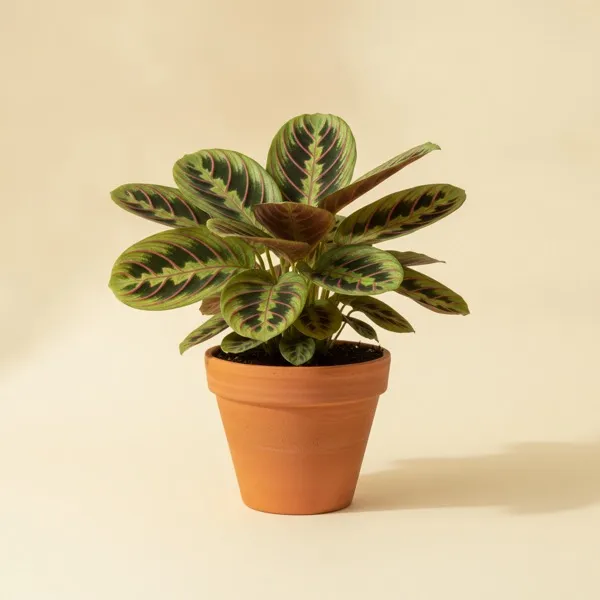
Oval leaves painted with herringbone veins that fold together upright at dusk and open flat at dawn, the movement the name refers to. It wants soft water and steady warmth.
Origin: Brazil
Vivid violet leaves and stems that hold their colour only in strong light, in shade it turns green and sprawls. Brittle, fast, and rooted from any broken piece.
Origin: Eastern Mexico
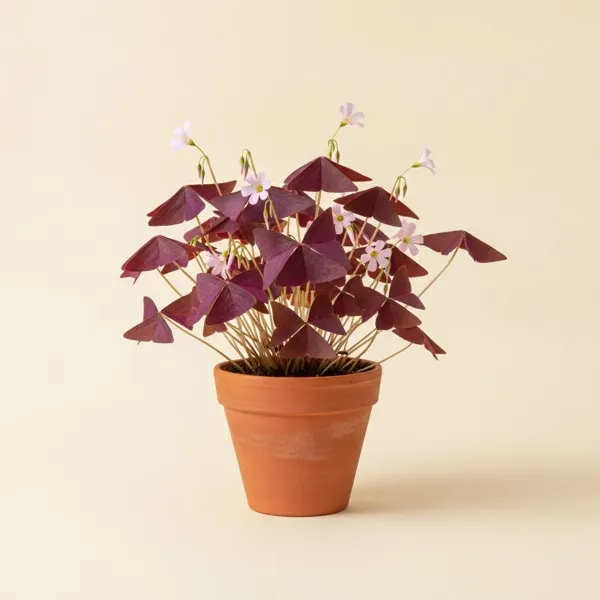
Triangular deep-purple leaflets on thin stalks, folding shut at night like butterflies. It grows from small bulbs and goes dormant a couple of times a year, stop watering, wait, and it returns.
Origin: Brazil
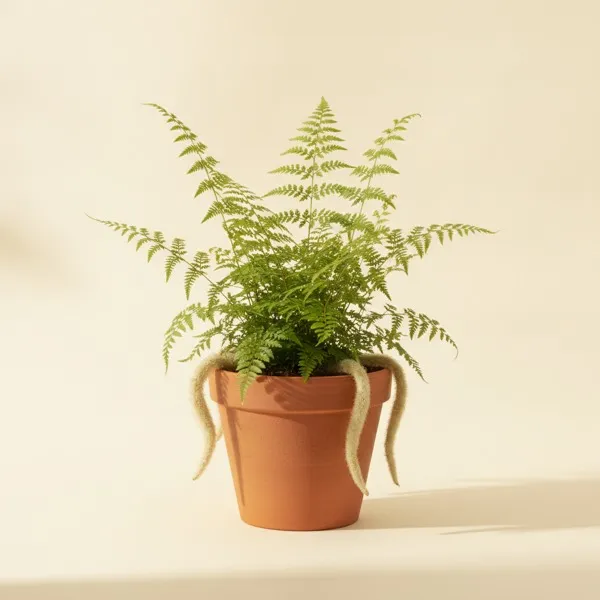
Named for the furry creeping rhizomes that crawl over the pot rim and are meant to be above the soil, not buried. Finely divided fronds and tougher than most ferns indoors.
Origin: Fiji
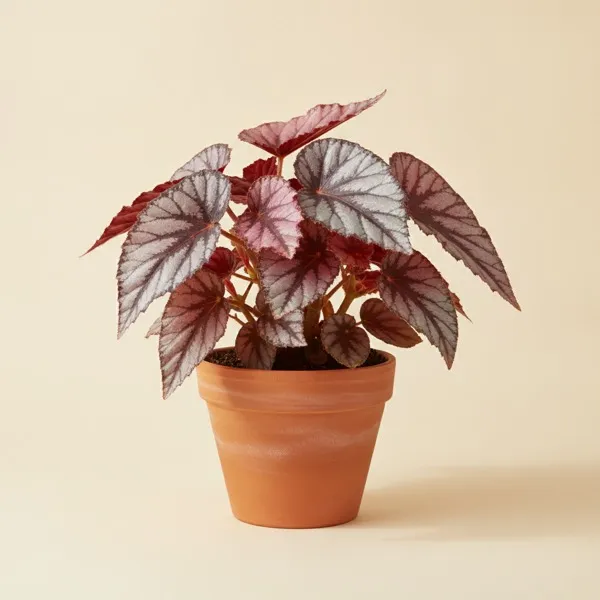
Grown entirely for the leaf: metallic swirls, spirals and near-black patterns, in hundreds of named cultivars. It grows from a rhizome and wants humidity without water ever touching the leaves.
Origin: North-eastern India and Vietnam, by way of two centuries of breeding
A resinous evergreen shrub built for sun and wind, which is why it sulks in still indoor air. Give it the brightest cool window you have and let it dry between waterings.
Origin: the Mediterranean
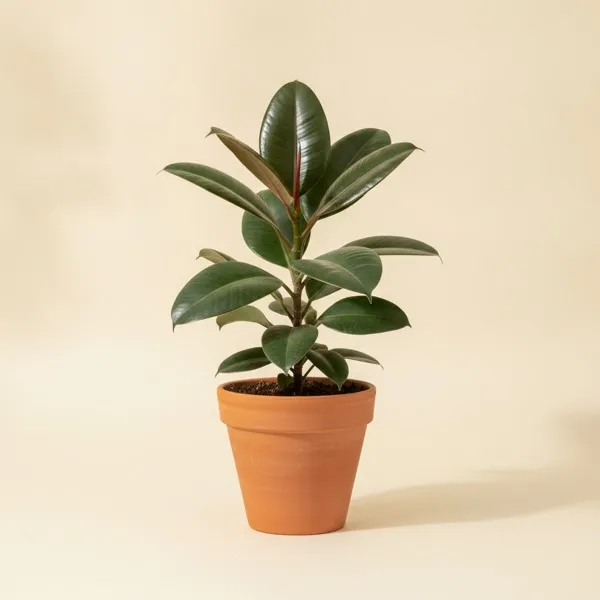
Big glossy leathery leaves on a thickening trunk, a strangler fig that becomes a tree if the ceiling allows. Cut stems bleed white latex; the sap stains and irritates skin.
Origin: North-eastern India through to Indonesia
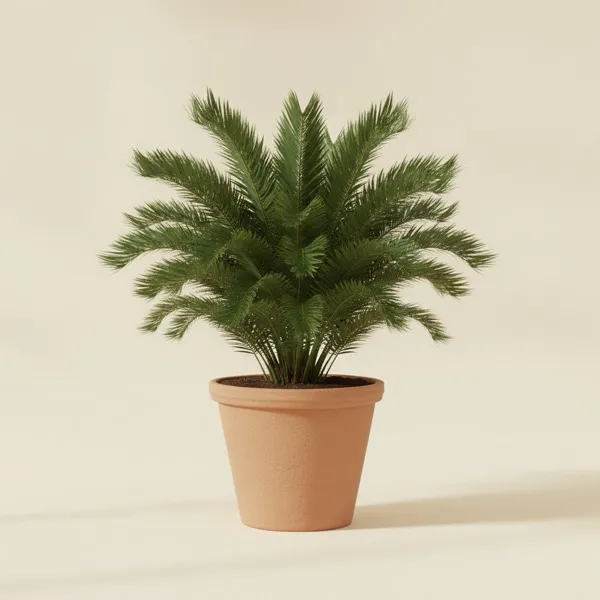
A cycad, not a palm, a lineage older than flowering plants, growing one stiff whorl of fronds a year from a scaly trunk. Every part is seriously poisonous, the seeds most of all.
Origin: Southern Japan, in Kyushu and the Ryukyu islands
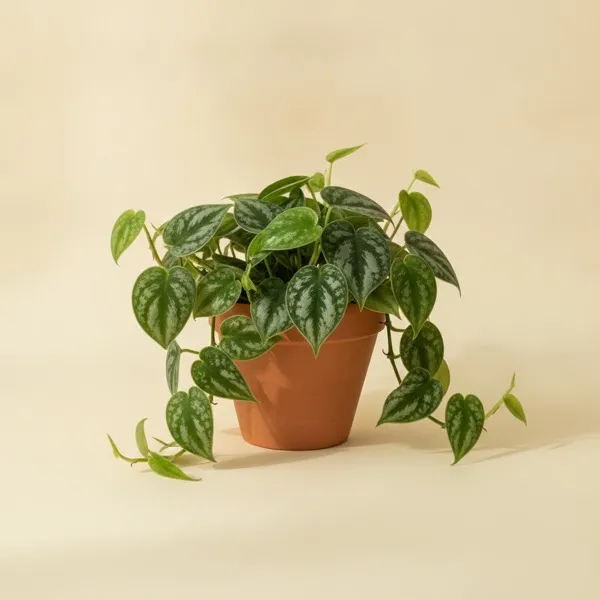
Not a true pothos: thick matte leaves dusted with silver, on slower and tidier vines. Happy trailing from a shelf or climbing a small pole.
Origin: Southeast Asia
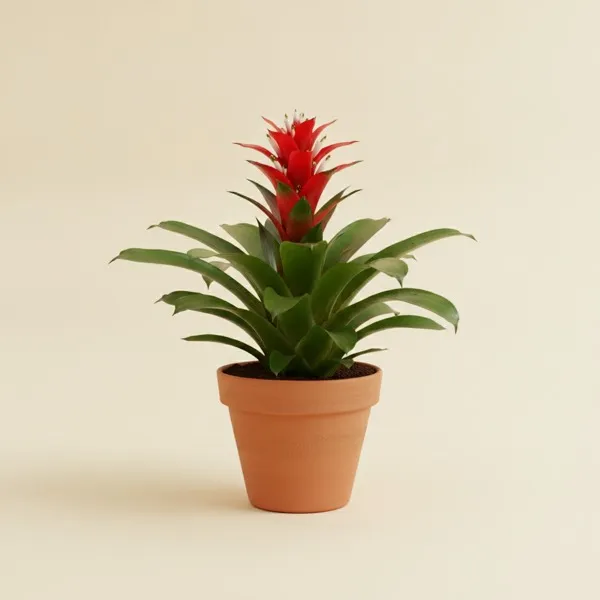
A glossy green rosette that throws up a long-lasting scarlet bract from its centre. That rosette flowers once, then makes pups and dies back, the pups are the next plant.
Origin: Central and South America and the West Indies
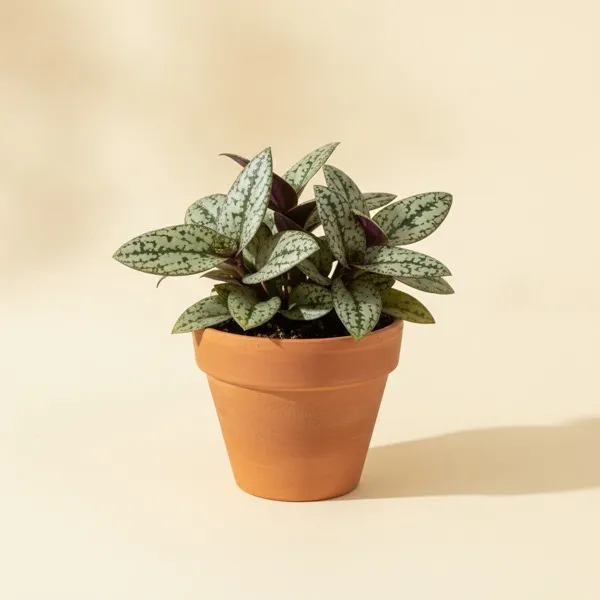
Purple-backed leaves spotted silver, growing from small bulbs that sit half out of the soil. A bulb succulent, so it wants a dry rest and shallow planting.
Origin: the Eastern Cape of South Africa
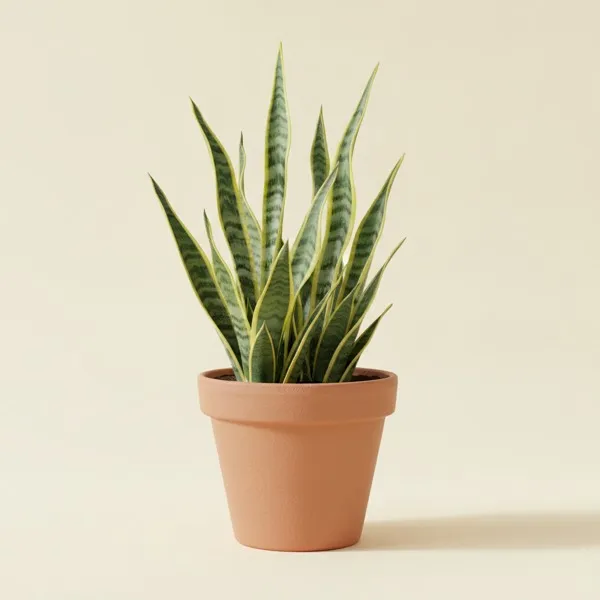
Stiff upright leaves banded and edged in yellow, growing from a rhizome that stores water for weeks. The most neglect-proof plant here, and the one most often killed by kindness.
Origin: West Africa, from Nigeria to the Congo
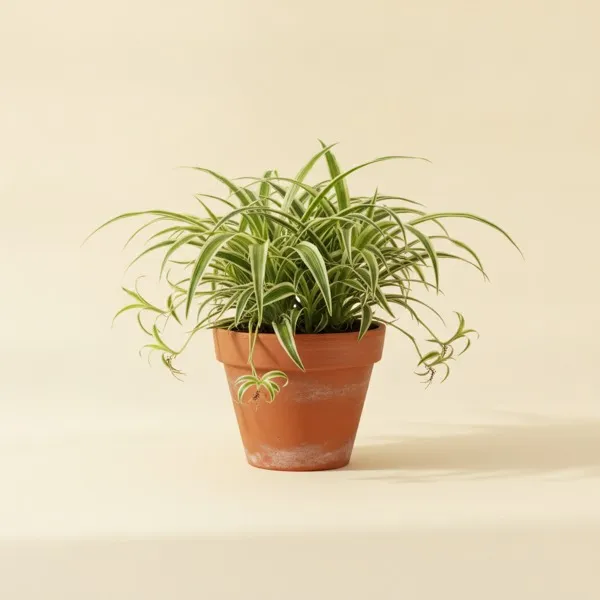
Arching striped leaves and dangling plantlets on wiry stems, the babies are the propagation. It stores water in thick tubers, which is why it forgives a forgotten fortnight.
Origin: Coastal South Africa
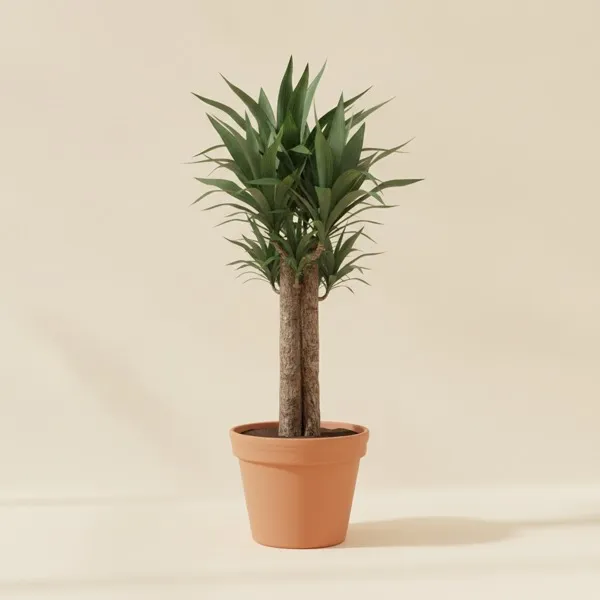
A thick woody trunk topped with rosettes of soft-tipped strap leaves, the yucca sold for living rooms, without the dagger points. Slow, dry-loving and very hard to kill in a bright room.
Origin: Central America, from Guatemala to Costa Rica
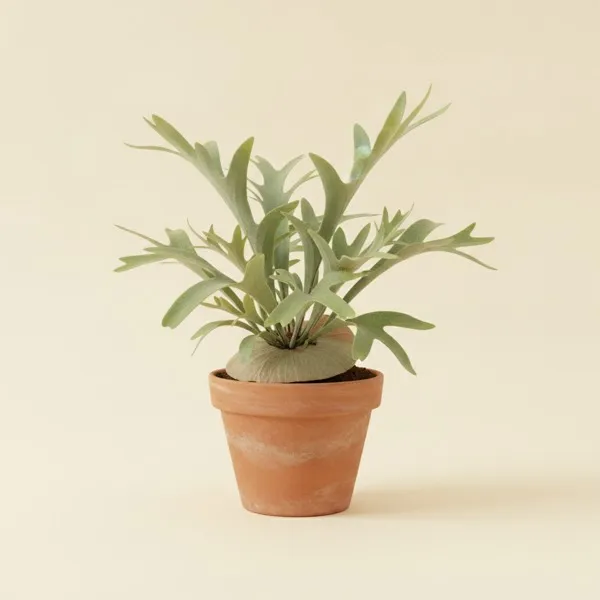
An epiphyte with two kinds of frond: flat shield fronds that clasp the mount and antler fronds that reach out. Grown on a board rather than in a pot, and watered by soaking.
Origin: Eastern Australia, New Guinea and Java
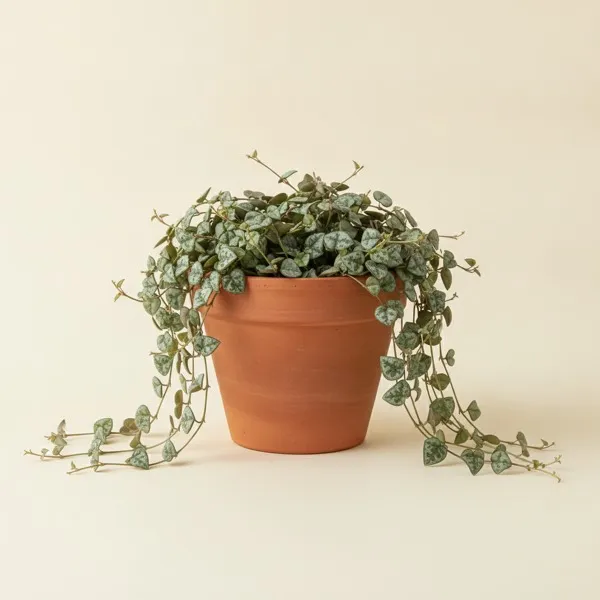
Thread-fine trailing stems strung with marbled heart-shaped leaves, metres long from a small pot. It makes aerial tubers along the strands, and each one roots into a new plant.
Origin: South Africa, Eswatini and Zimbabwe
Spherical leaves on trailing threads, each pearl with a translucent window stripe that lets light into its interior. Shallow-rooted, easily overwatered, and stunning in a hanging pot.
Origin: the dry Eastern Cape of South Africa
Leaves striped cream, green and pink over solid magenta undersides, the showiest of the prayer-plant family. It moves its leaves through the day and wants the same soft water and warmth as its cousins.
Origin: the Atlantic forest of Brazil
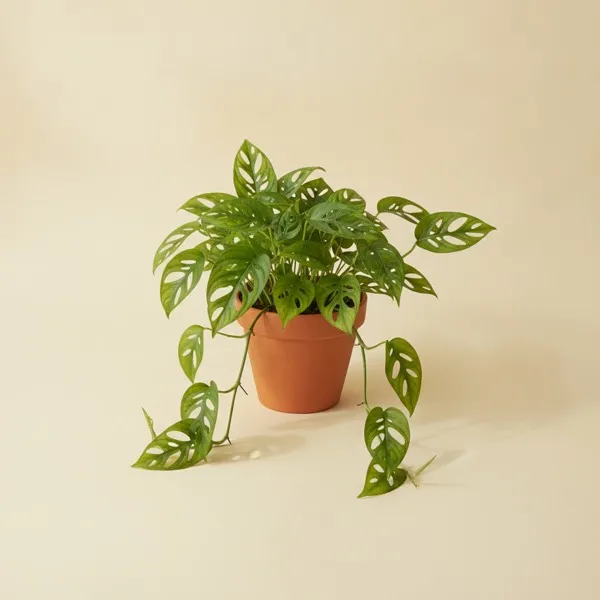
A smaller, faster relative of the monstera whose leaves are pierced with holes rather than split to the edge. It climbs or trails and roots from any node.
Origin: Central and South America and the Caribbean
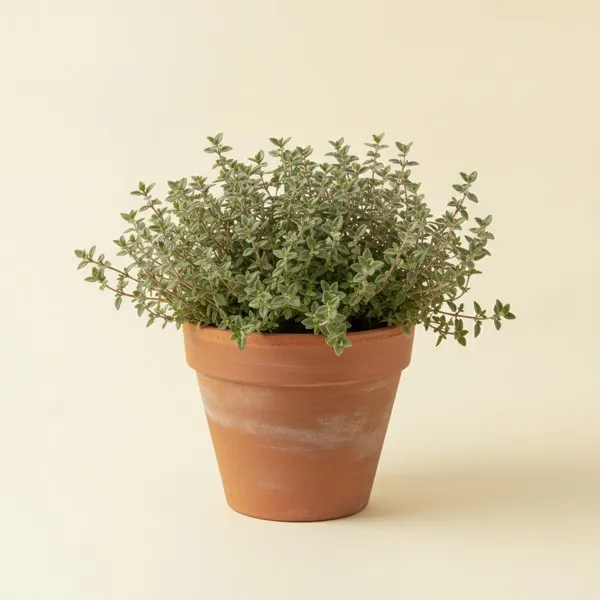
A low woody herb from dry rocky ground: it wants sun and sharp drainage and dies in a wet pot. Trim it regularly to stop the centre going bare and brown.
Origin: the western Mediterranean
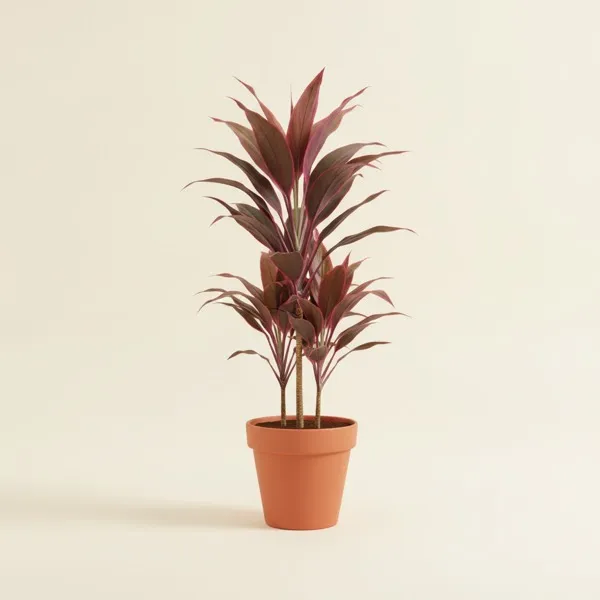
Strap leaves in pink, red and cream on slim canes, a plant of ceremony and boundary marking across Polynesia. The colour needs bright light, and the leaf tips burn on fluoridated water.
Origin: New Guinea and Southeast Asia, carried across the Pacific by voyagers
Flat rosettes held up on branching bare stems, some cultivars nearly black. It grows in winter and rests in summer, the opposite of most succulents, so a limp summer plant is usually just dormant.
Origin: the Canary Islands
Enormous deeply cut leaves on a thick self-heading trunk that leans and props itself on old leaf scars. It needs floor space more than anything else.
Origin: Southern Brazil and Paraguay
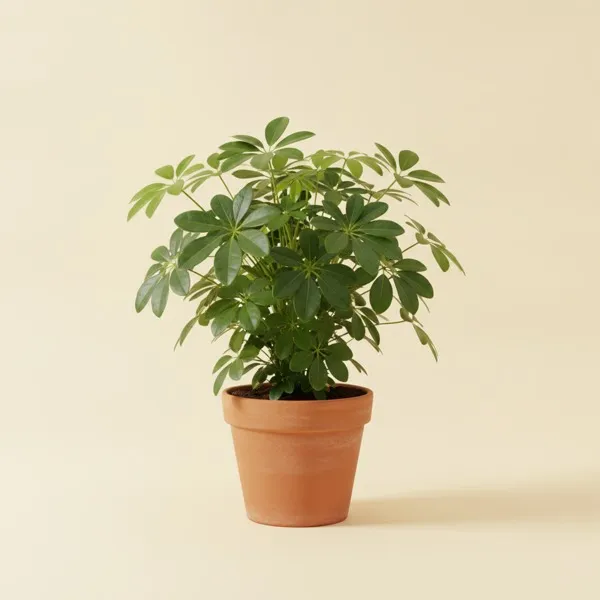
Whorls of glossy leaflets spread like spokes from each stalk, on a shrub that takes hard pruning and comes back bushier. Reliable, quick, and content with a moderately bright room.
Origin: Taiwan and Hainan
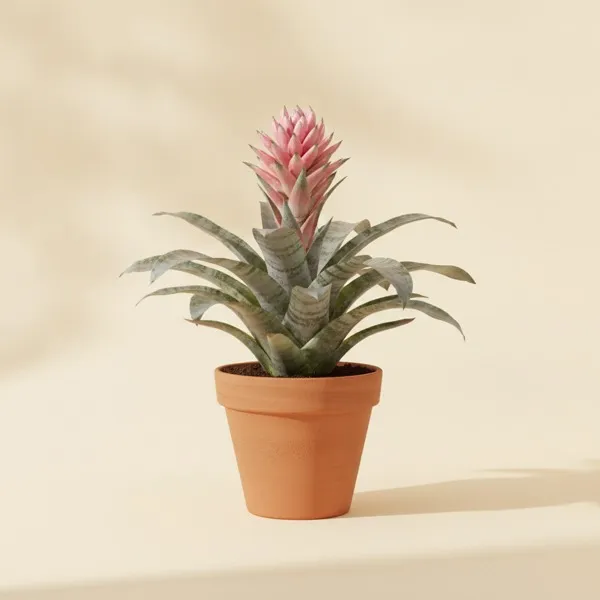
A silver-banded rosette holding water in its central cup, topped by a pink bract that lasts for months. Keep the cup filled with soft water and the soil barely moist; the rosette flowers once, then pups.
Origin: Eastern Brazil
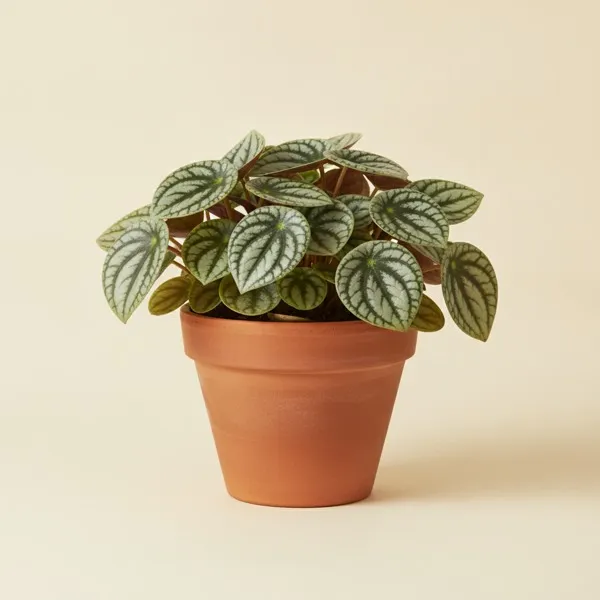
Round leaves striped silver and green exactly like a watermelon rind, on red stalks. Semi- succulent, so it stores water and resents a soggy pot.
Origin: Northern South America
A waxy-leaved climber that rewards patience with clusters of scented porcelain flowers. It blooms from the same short spurs every year, so those are the one thing never to prune off.
Origin: East Asia, from southern China and India to Australia
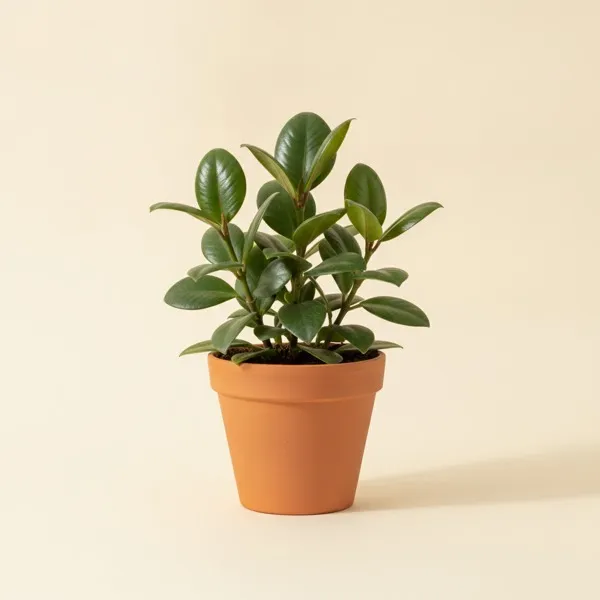
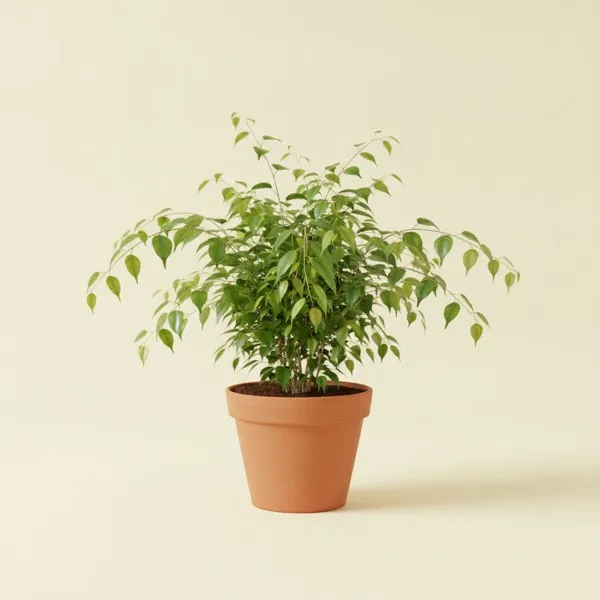
A small-leaved fig that makes a fine indoor tree and objects to every change by dropping leaves. Settle it in one bright spot and it refoliates and stays for years.
Origin: South and Southeast Asia and northern Australia
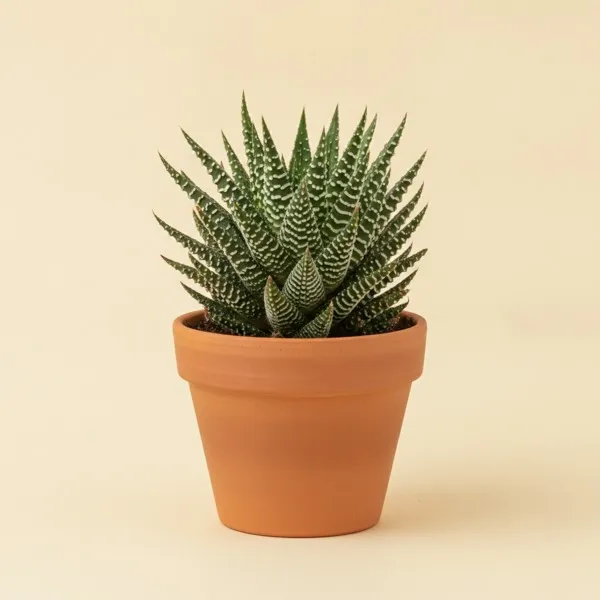
A small dark rosette banded with raised white dots, often mistaken for a tiny aloe. It grows in the shade of shrubs in the wild, so it wants bright light rather than scorching sun.
Origin: the Eastern Cape of South Africa
Dark leaves with bold ivory veins, and a tall yellow flower bract that lasts weeks. It drops leaves at the first sign of dry air or a cold draught, which is why it is usually short-lived indoors.
Origin: Brazil
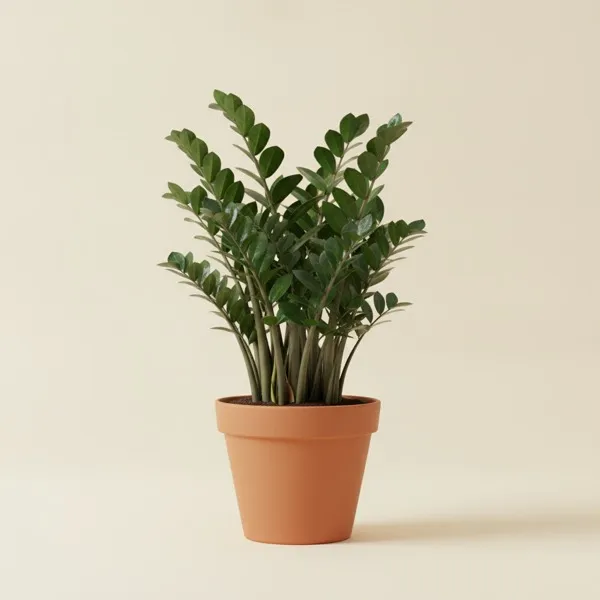
Glossy leaflets on upright stems rising from potato-like rhizomes that store months of water. It will hold its looks through a dim office and a forgotten holiday, and rots if watered on a schedule.
Origin: Eastern Africa, from Kenya to South Africa
Nothing matches that. The database covers 100 common houseplants, not every species.
This table tells you what a plant wants. Solspot tells you what a spot in your home gives, in lux, with the honest range attached, then matches the two. Free, offline, no account.
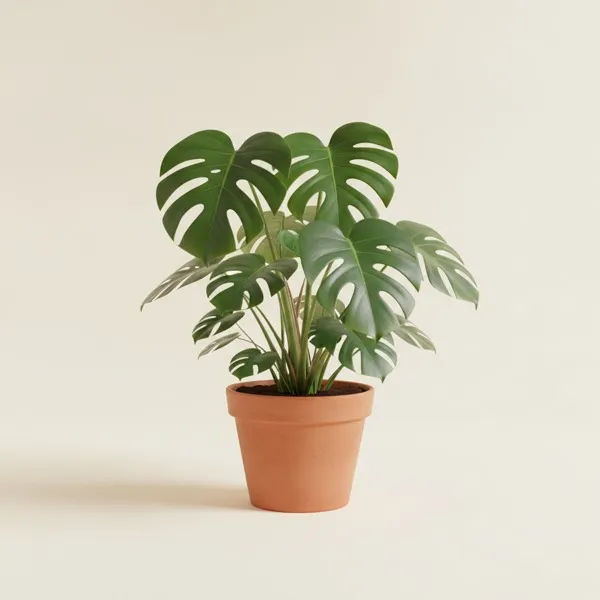
Monstera deliciosa does best in bright indirect light, roughly 10,000 to 20,000 lux, and tolerates medium light down to about 2,500 lux with slower growth and fewer splits in the leaves. Published figures vary widely, mostly because some sources quote foot-candles at leaf level rather than lux at the spot.
Low is under 2,500 lux, medium is 2,500 to 10,000, bright indirect is 10,000 to 20,000, and direct sun is above 20,000. Indoor light is far dimmer than it looks, because your eyes adapt and a meter does not. A room that feels bright is often 2,000 to 5,000 lux a few steps in from the window.
Filter the light chips above to Low to see every species here that does best in it. Tolerating low light is not the same as preferring it: most low-light survivors grow faster and look better in medium light, and in low light they decline slowly rather than die quickly.
Each card links to the references its light claim was checked against, mostly the North Carolina Extension Gardener Plant Toolbox and the Missouri Botanical Garden Plant Finder. The four lux bands are the same ones the Solspot app sorts readings into, so a measurement and this table use one scale.
Approximately. A phone is a good relative light sensor and an imprecise absolute one, so a reading should carry the range it could really fall in. Solspot reads the exposure meter of the front camera and gives a category plus that range, instead of one number that looks more precise than it is.
A free tool from Bald.studio, built from the plant database of Solspot.